Factory Works is an architecture and design studio. We design bespoke homes, furniture, and objects. Our work moves between drawing and making, between technology and craft, exploring how context, form, material, and light shape one another.
Courtyard House
,
Residential
,
2026
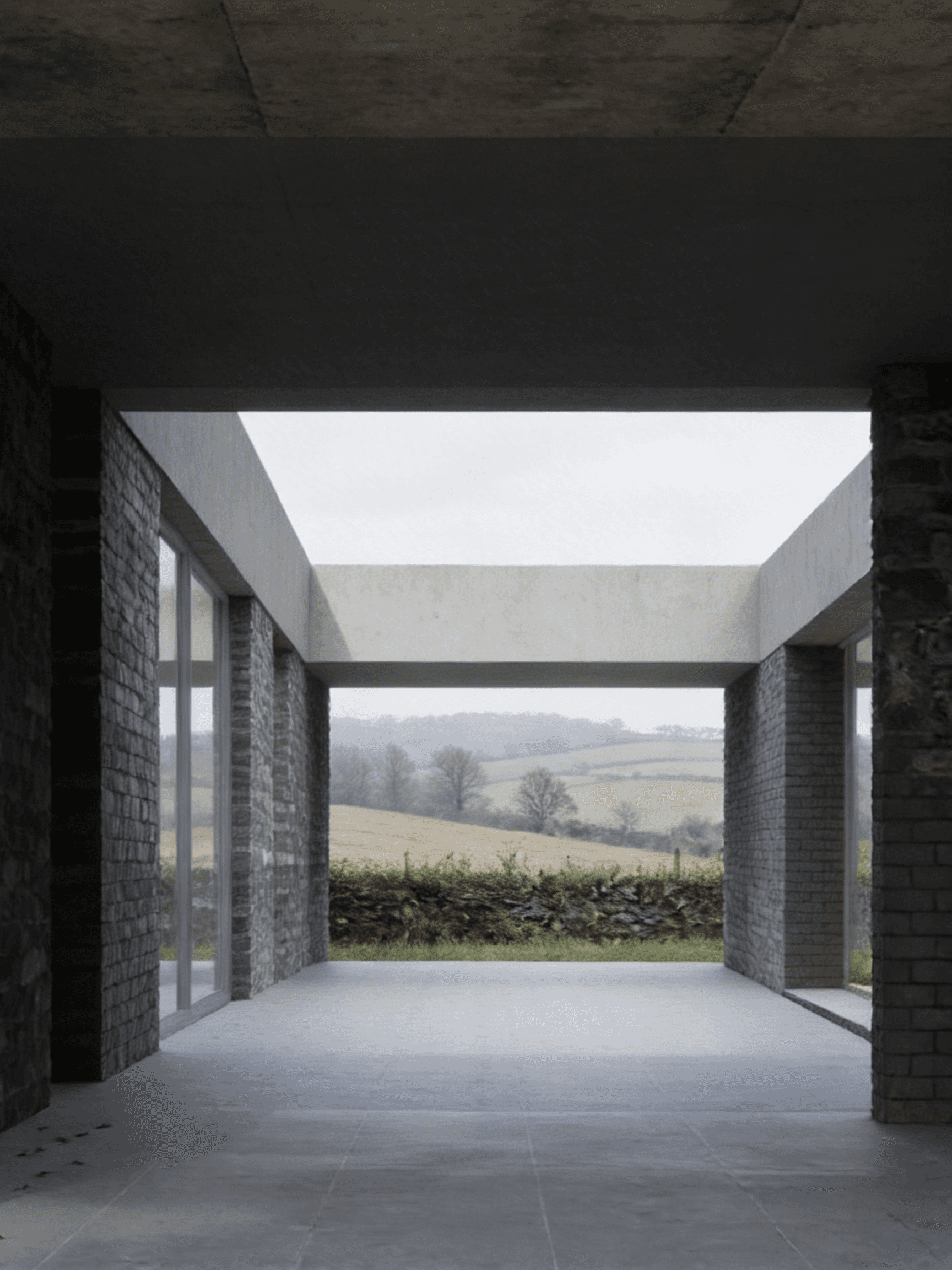
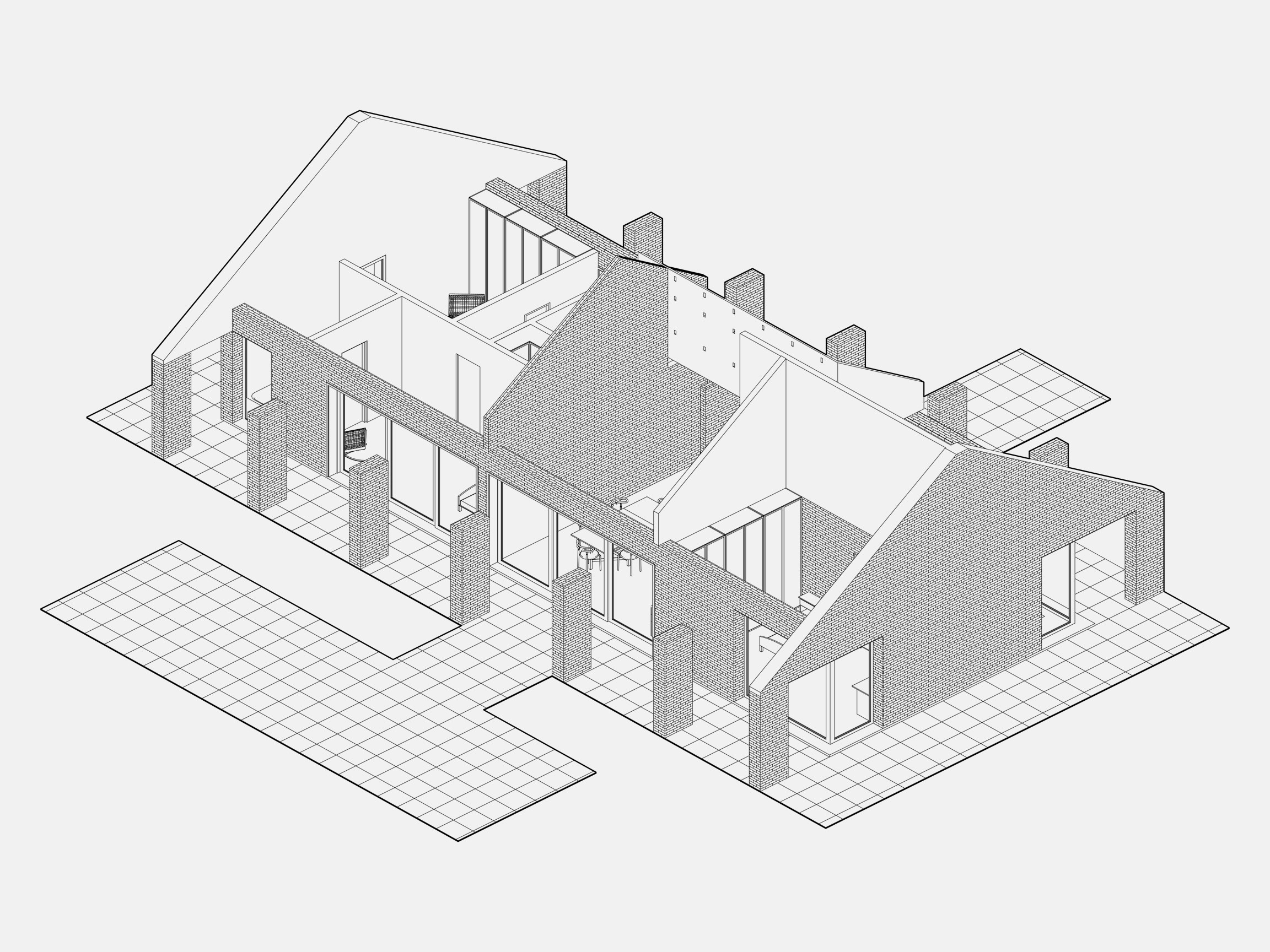
Courtyard House is a private dwelling set high within the exposed agricultural landscape of the South Hams. From its approach, the building reads as a single storey courtyard house, composed in grey brick with a continuous concrete band marking the roofline and reinforcing its horizontal form. Arranged around a semi-enclosed courtyard, the plan creates shelter and privacy while maintaining a calm, grounded presence within the open terrain. As the land falls away, the house reveals its second storey to the rear. Here, floor to ceiling glazing to the ground floor bedroom accommodation frames expansive views across the rolling countryside, anchoring the interior directly to the landscape. All accommodation is linked by a glazed walkway and bridge that overlook both the courtyard and the double height kitchen, dining and living space below, turning circulation into a sequence of framed views and layered spatial relationships. Materiality is robust and restrained. Grey brick and expressed concrete banding establish weight and permanence, while deep set glazing introduces shadow and precision. The result is a dwelling that appears modest from arrival yet opens generously to its setting, negotiating exposure and shelter through careful composition, section and material clarity.
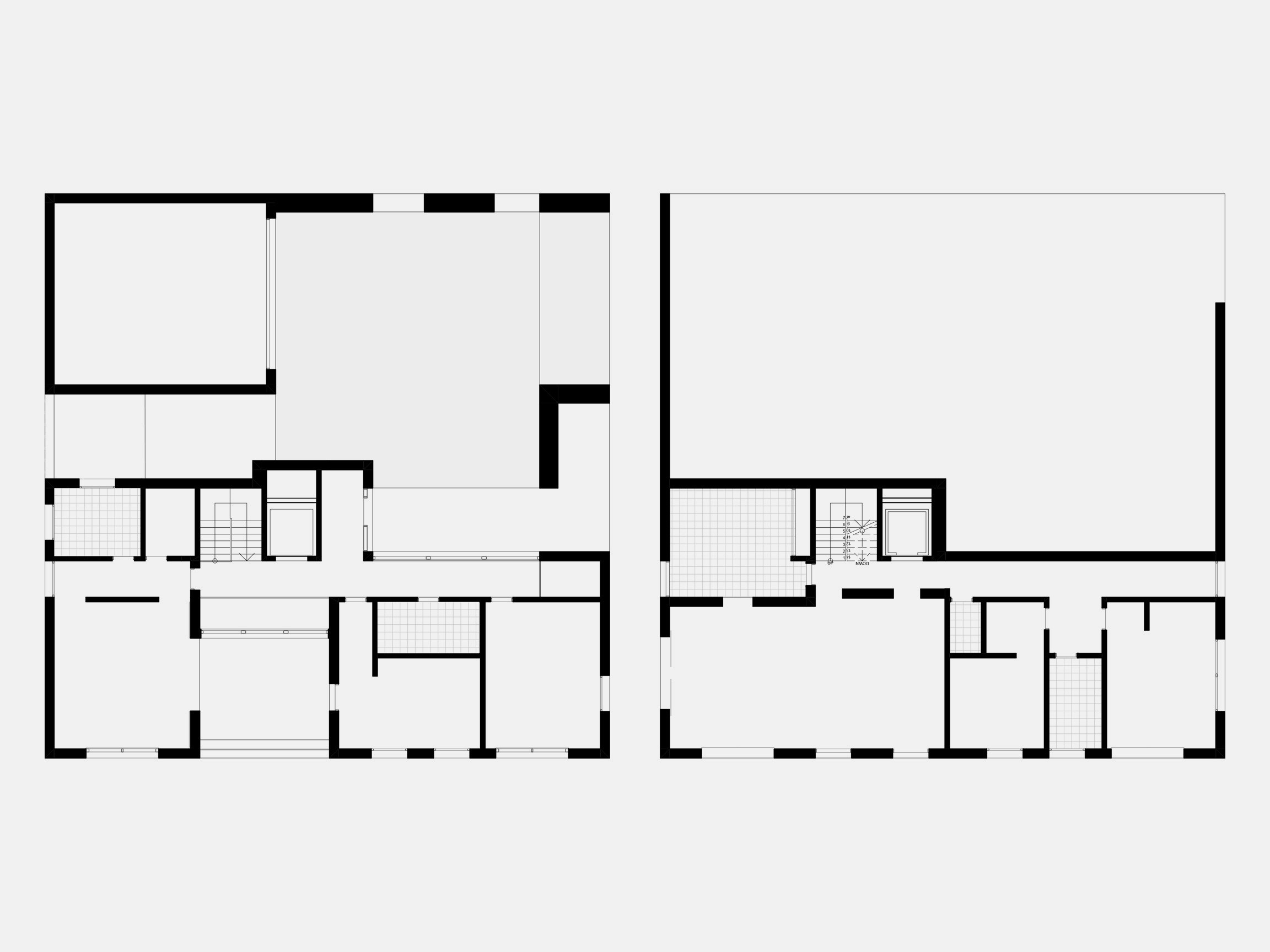
COURTYARD HOUSE_PLAN.jpg
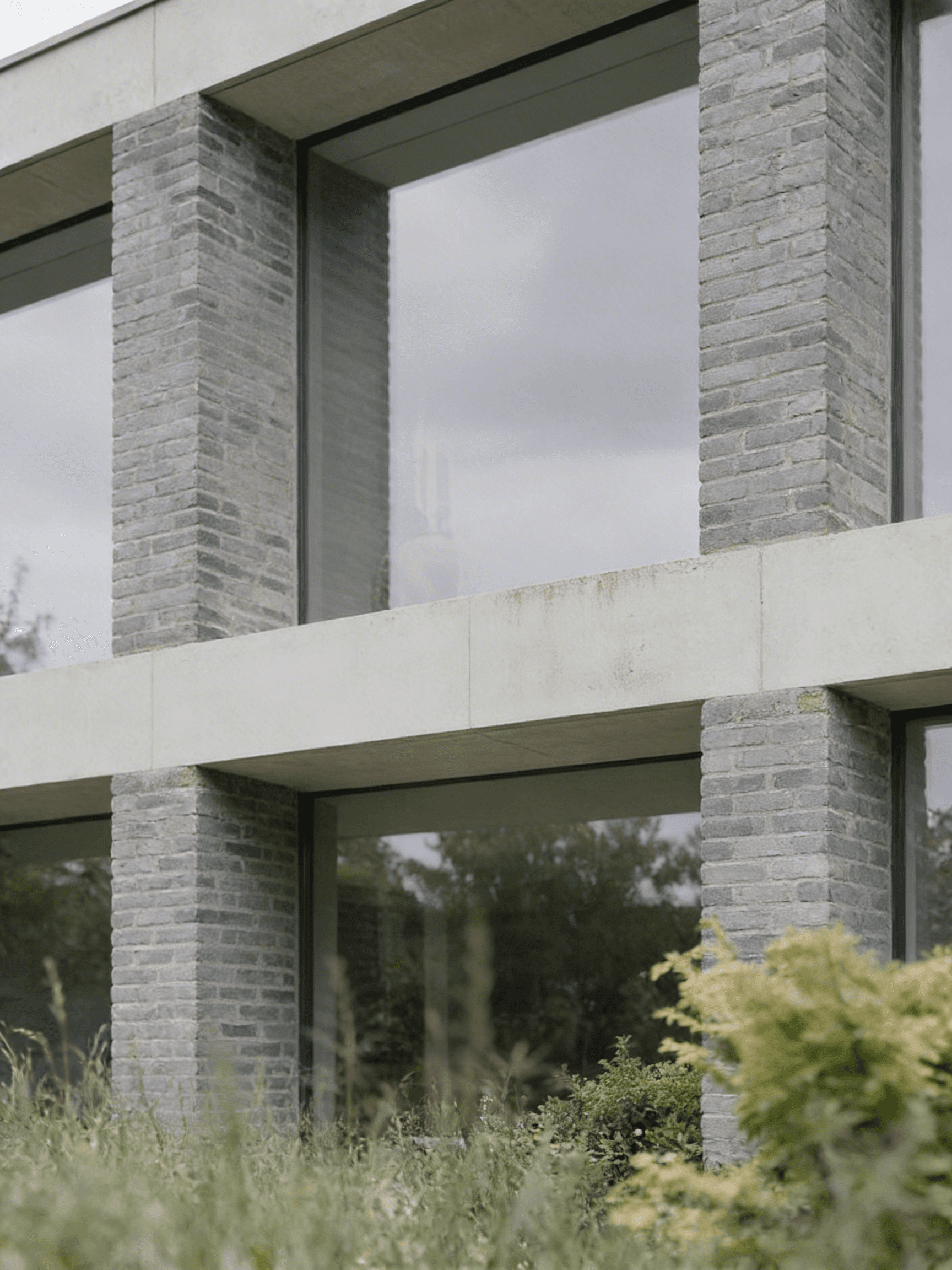
COURTYARD HOUSE_02.jpg
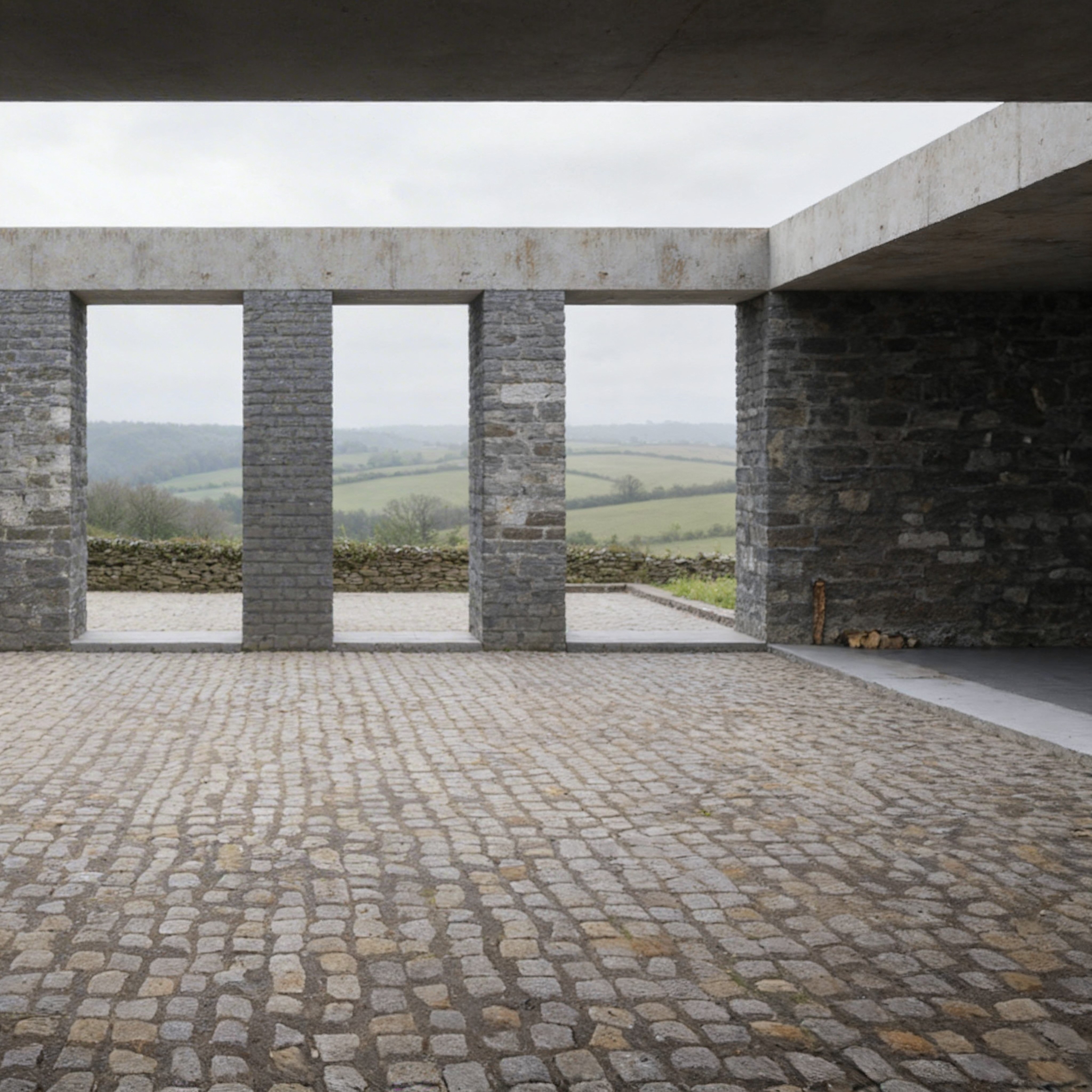
COURTYARD HOUSE_03.jpg
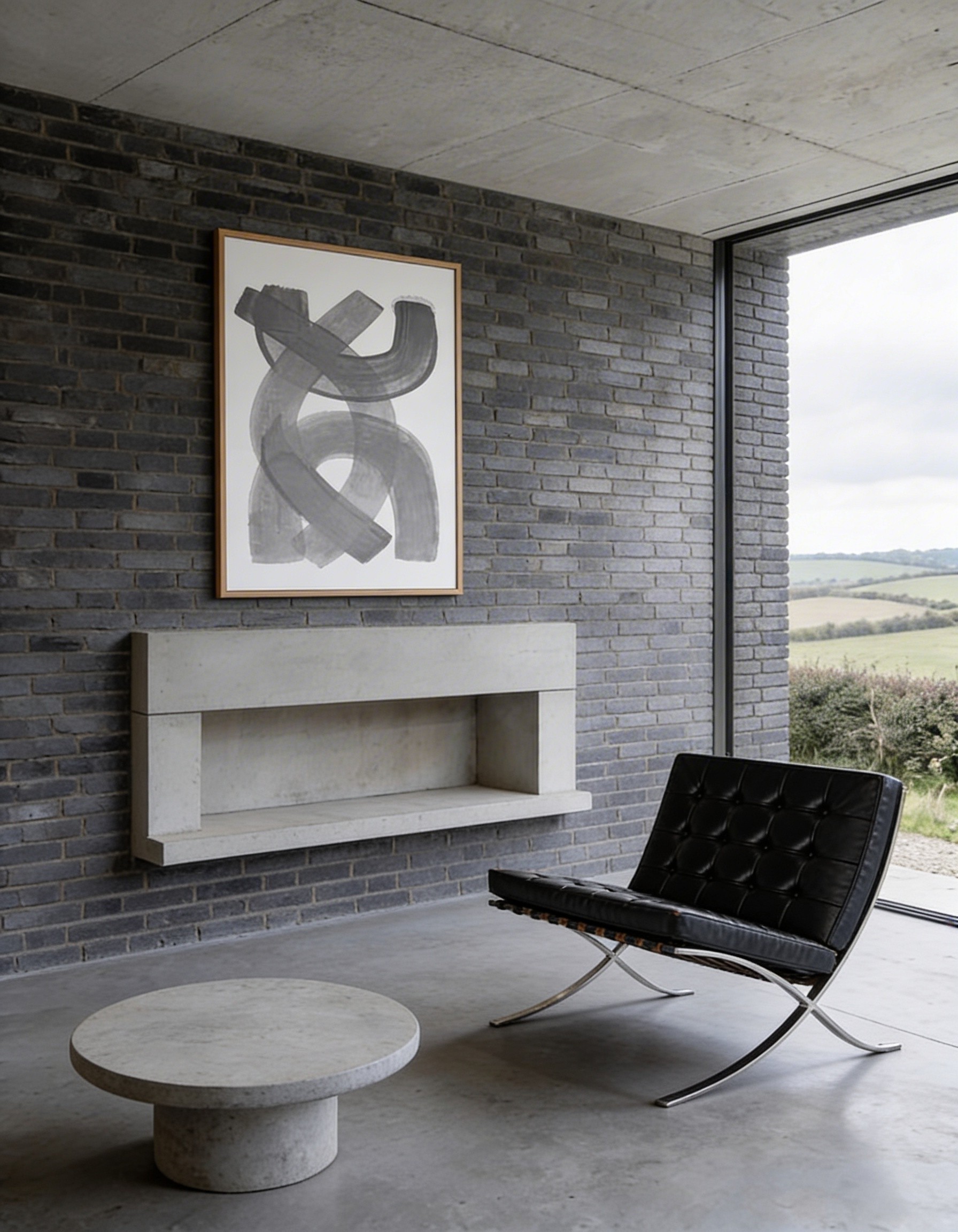
COURTYARD HOUSE_05.jpg

COURTYARD HOUSE_06.jpg
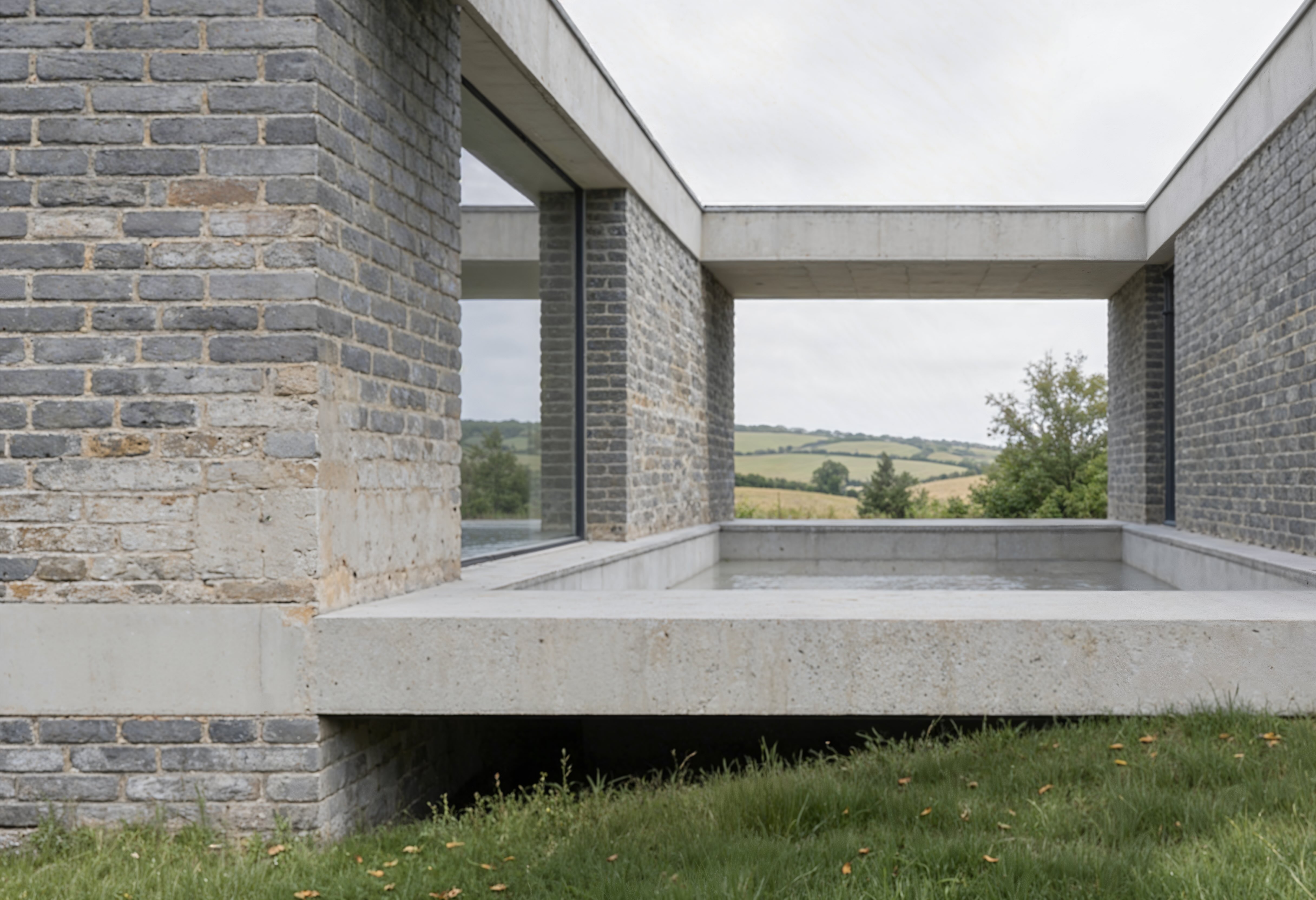
COURTYARD HOUSE_07.jpg
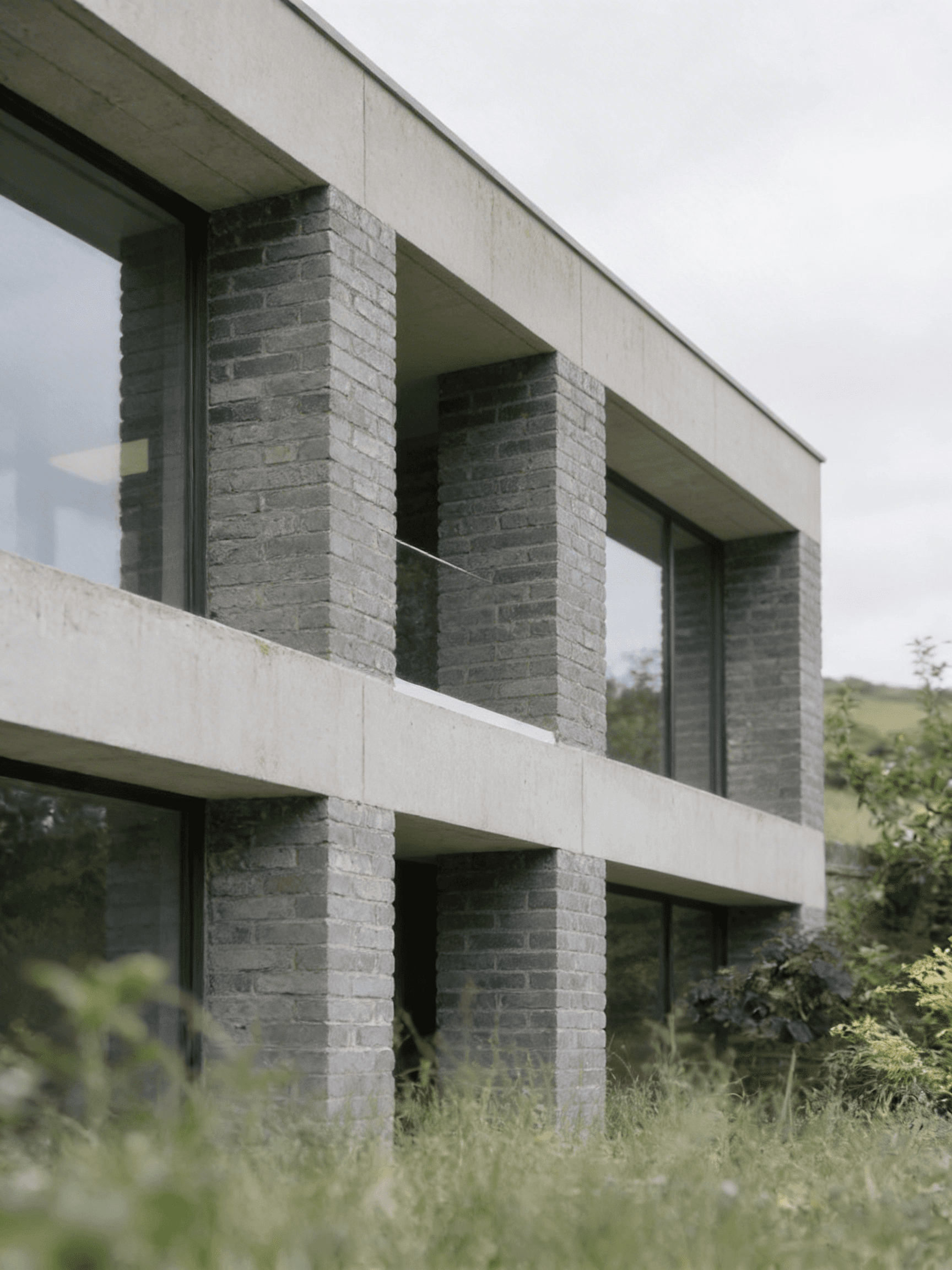
COURTYARD HOUSE_08.jpg
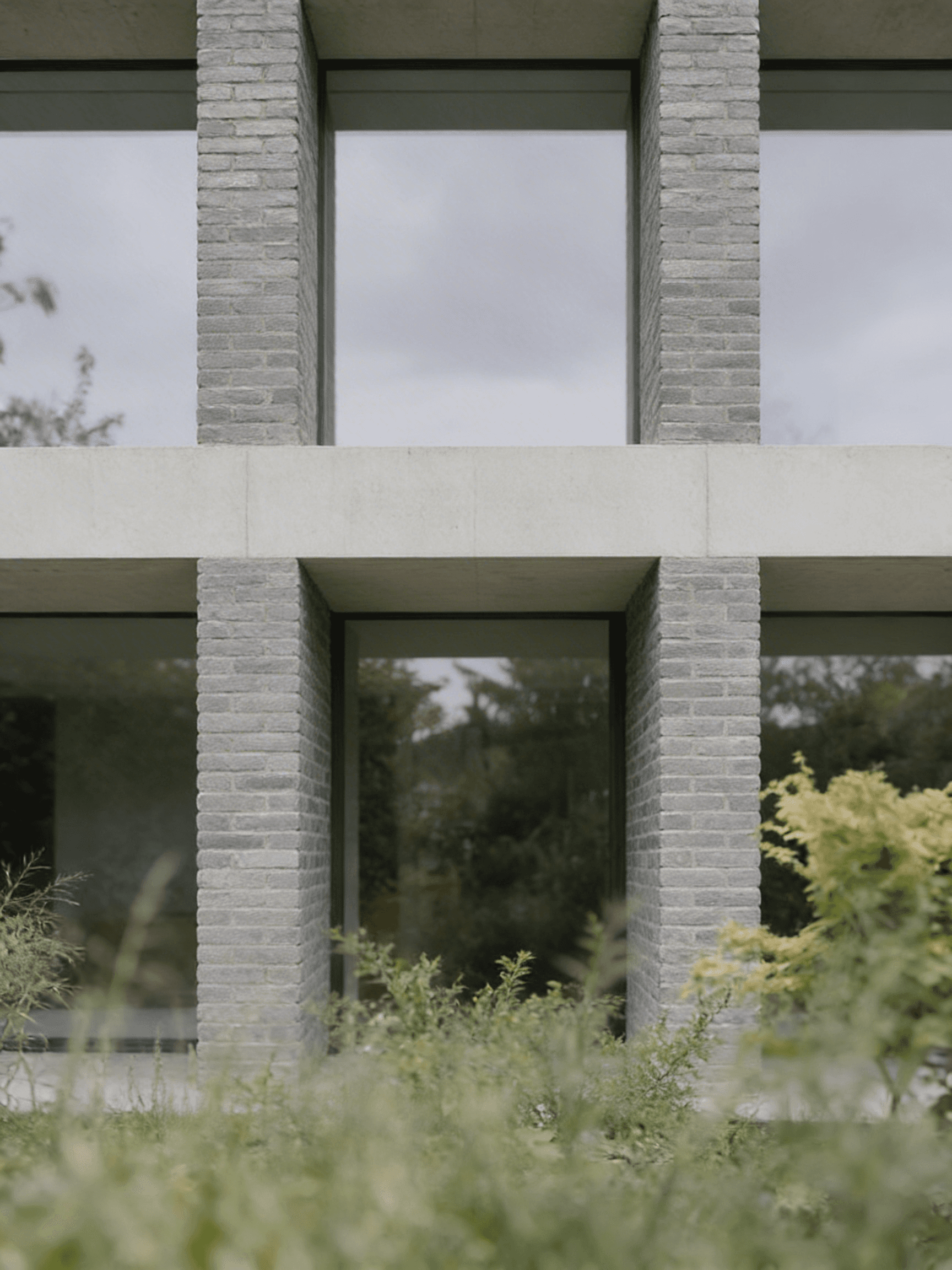
COURTYARD HOUSE_09.jpg
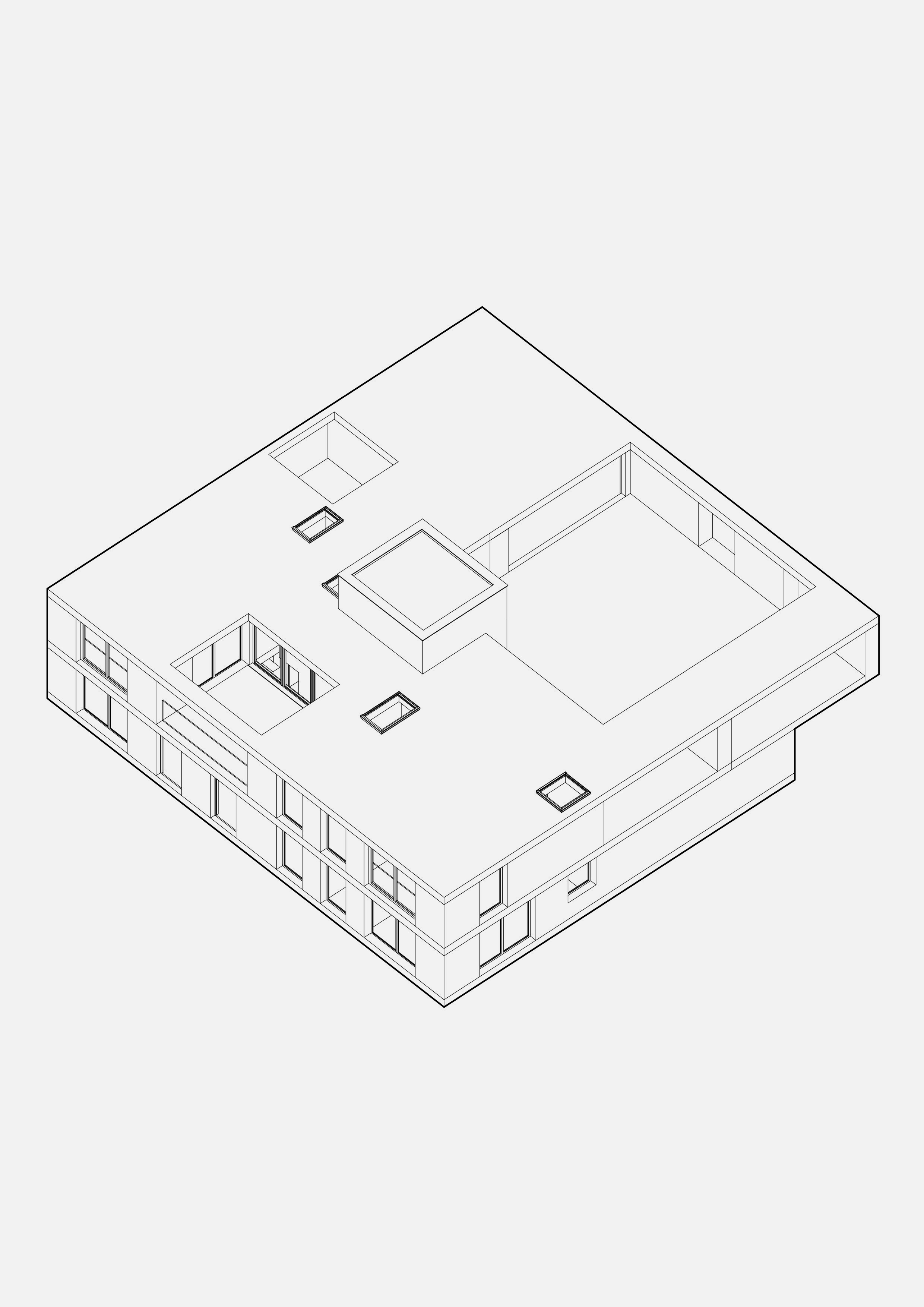
COURTYARD HOUSE_AXO.jpg
COURTYARD HOUSE_04.jpg
Courtyard House
,
Residential
,
2026
Courtyard House is a private dwelling set high within the exposed agricultural landscape of the South Hams. From its approach, the building reads as a single storey courtyard house, composed in grey brick with a continuous concrete band marking the roofline and reinforcing its horizontal form. Arranged around a semi-enclosed courtyard, the plan creates shelter and privacy while maintaining a calm, grounded presence within the open terrain. As the land falls away, the house reveals its second storey to the rear. Here, floor to ceiling glazing to the ground floor bedroom accommodation frames expansive views across the rolling countryside, anchoring the interior directly to the landscape. All accommodation is linked by a glazed walkway and bridge that overlook both the courtyard and the double height kitchen, dining and living space below, turning circulation into a sequence of framed views and layered spatial relationships. Materiality is robust and restrained. Grey brick and expressed concrete banding establish weight and permanence, while deep set glazing introduces shadow and precision. The result is a dwelling that appears modest from arrival yet opens generously to its setting, negotiating exposure and shelter through careful composition, section and material clarity.
COURTYARD HOUSE_PLAN.jpg
COURTYARD HOUSE_02.jpg
COURTYARD HOUSE_03.jpg
COURTYARD HOUSE_05.jpg
COURTYARD HOUSE_06.jpg
COURTYARD HOUSE_07.jpg
COURTYARD HOUSE_08.jpg
COURTYARD HOUSE_09.jpg
COURTYARD HOUSE_AXO.jpg
COURTYARD HOUSE_04.jpg
Roast House
,
Architecture
,
2025
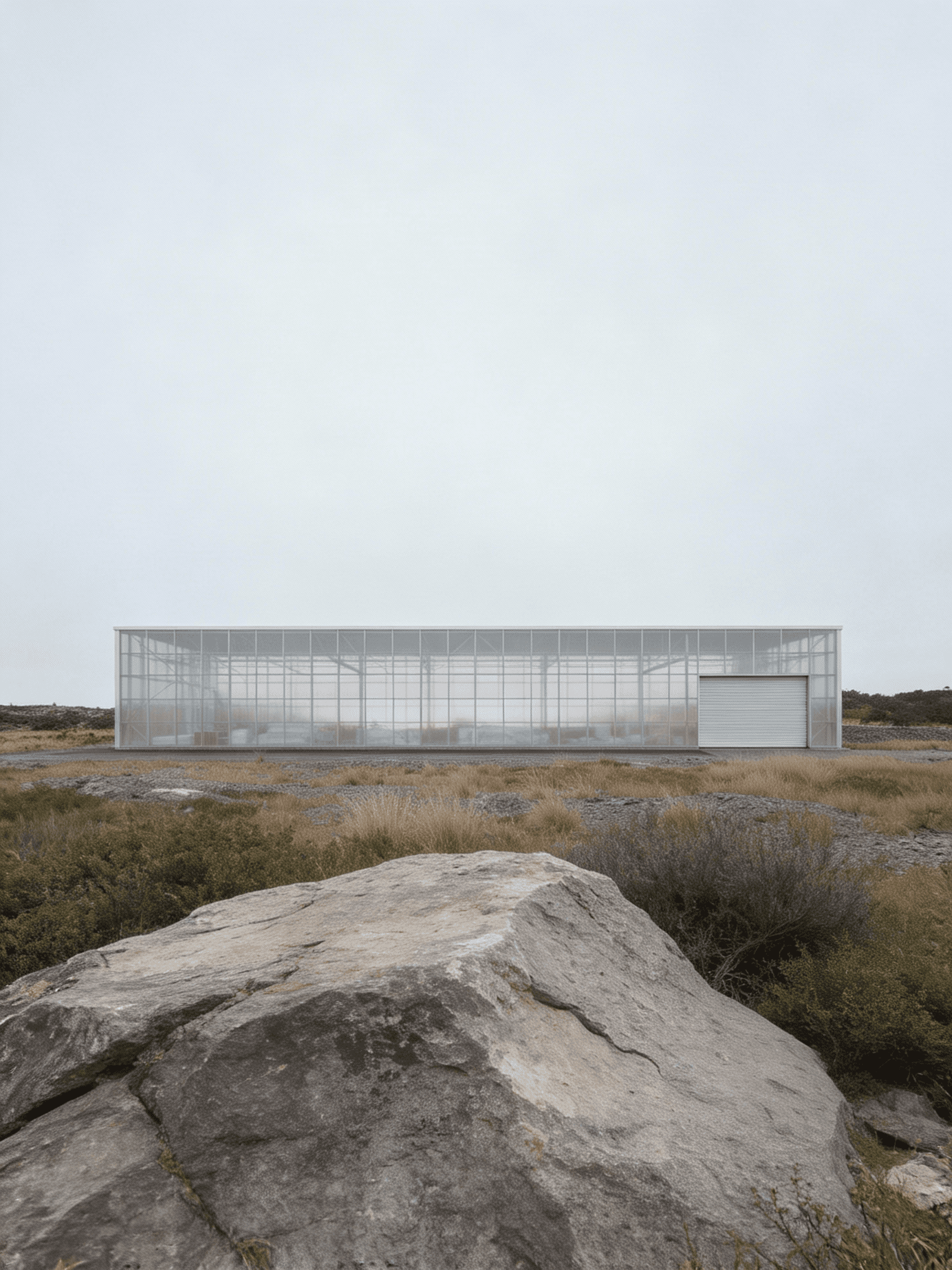
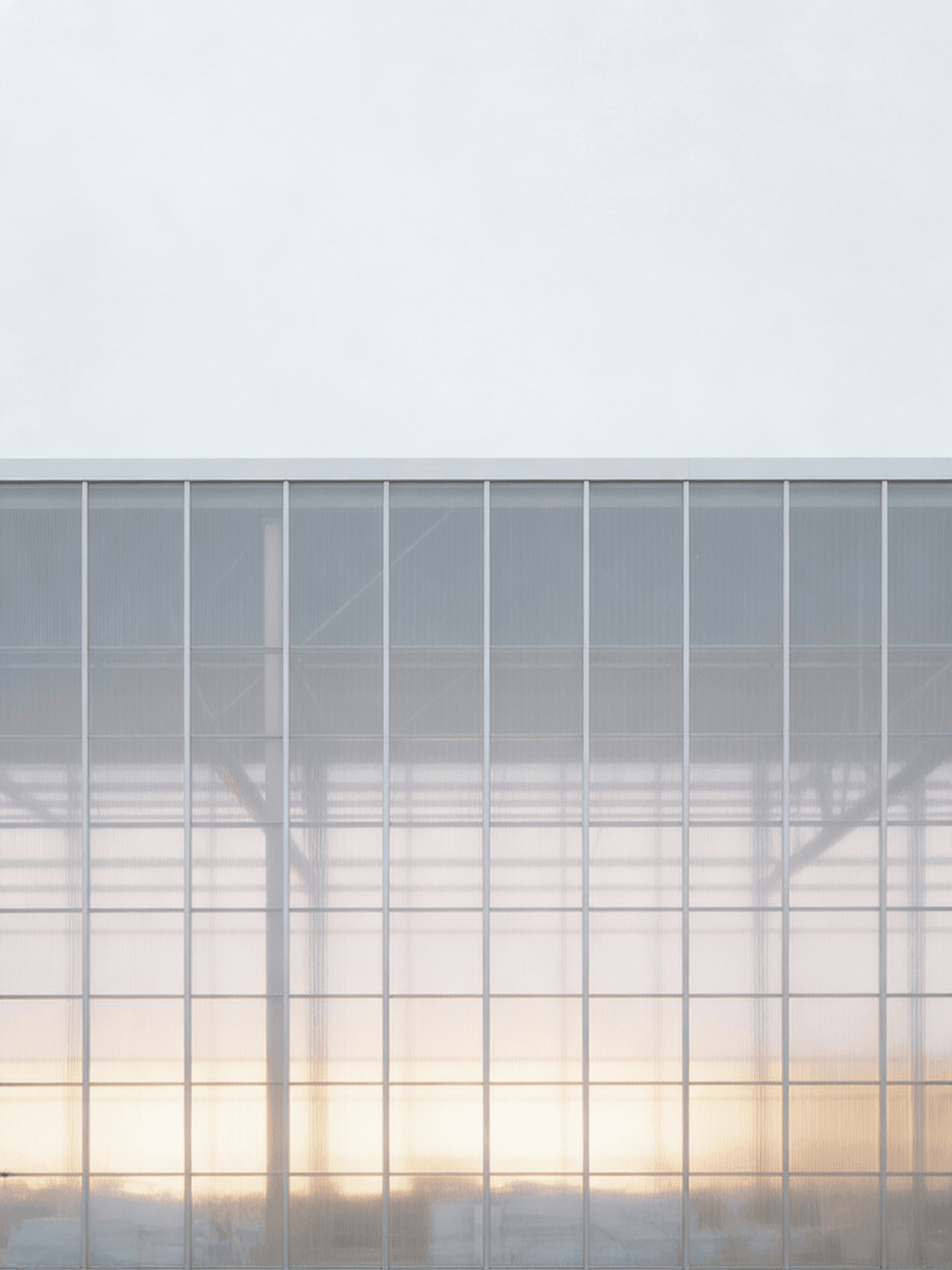
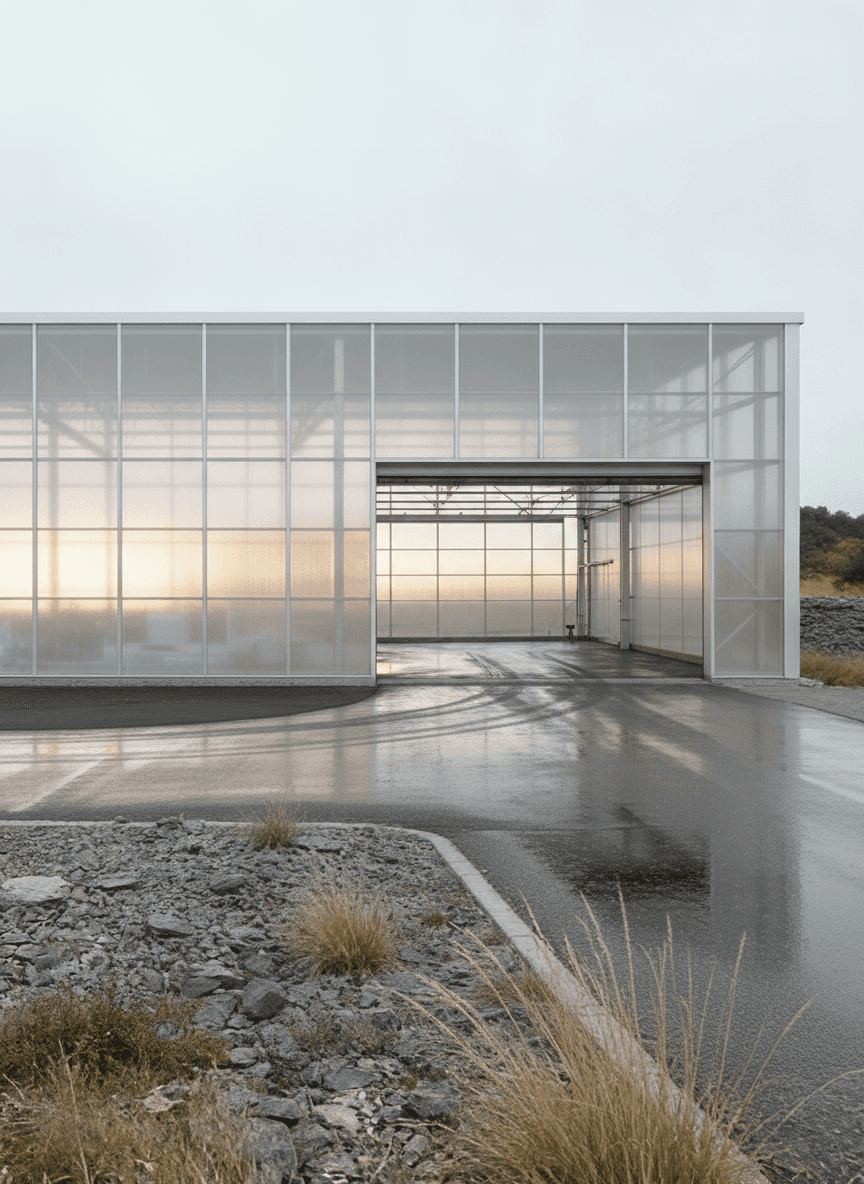
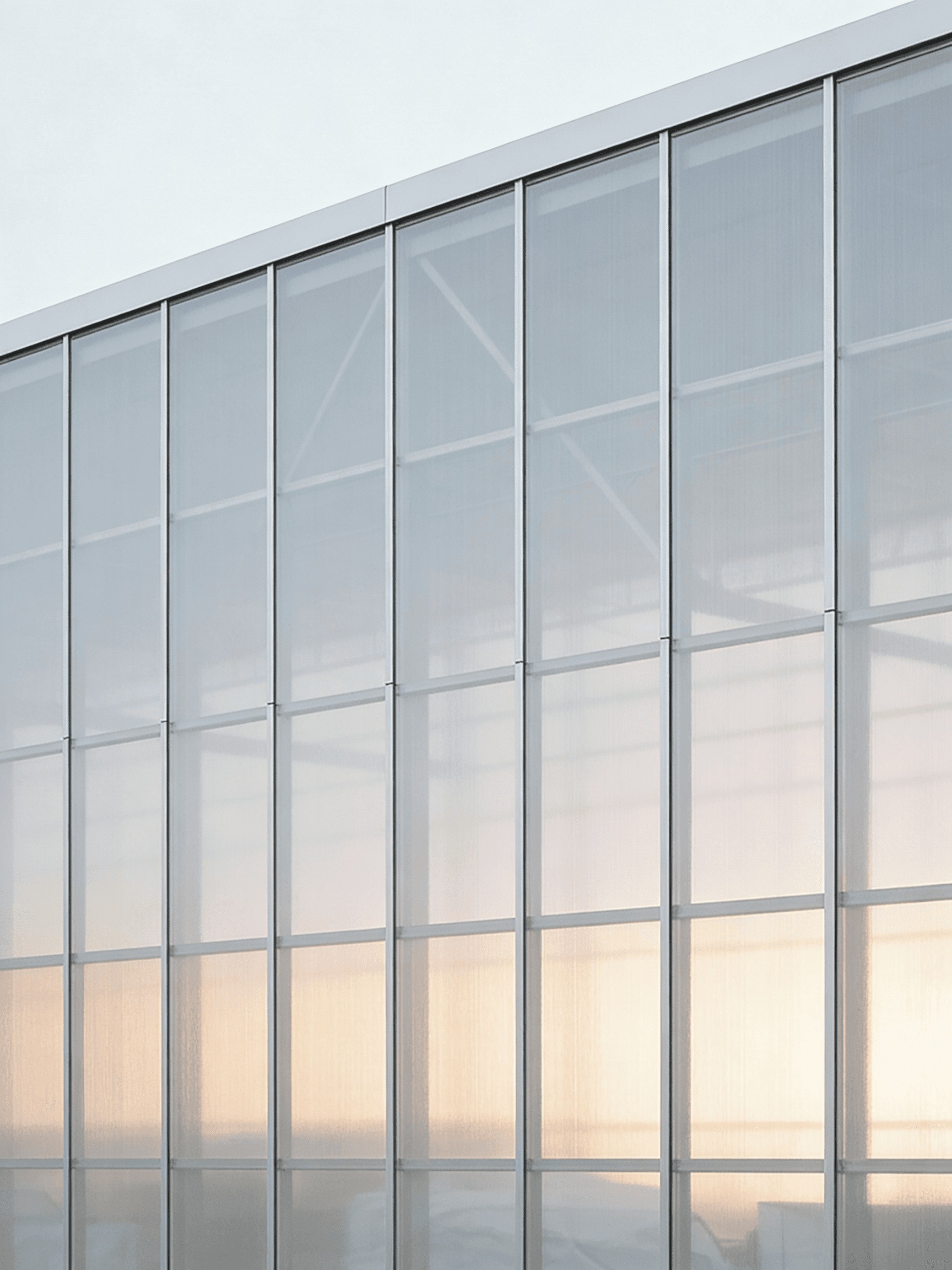
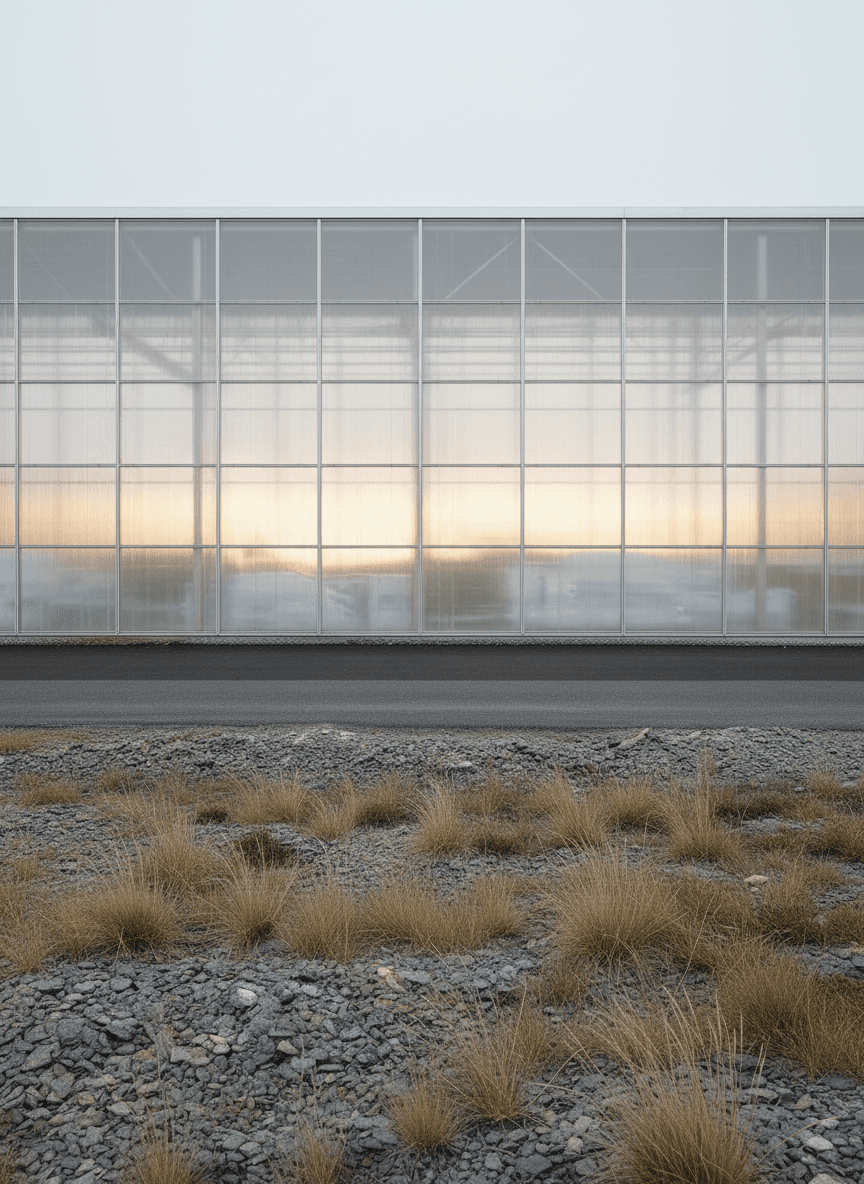
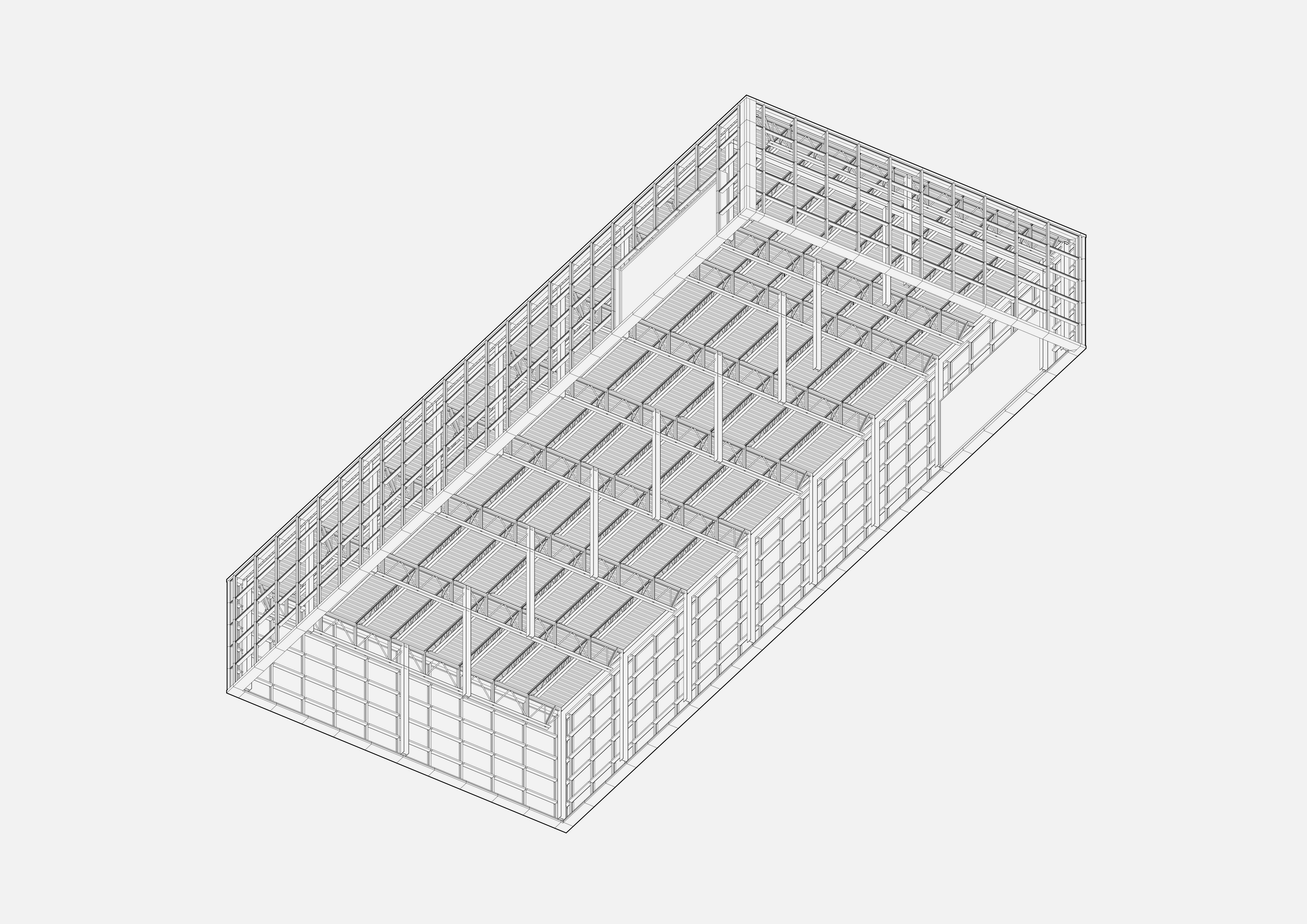
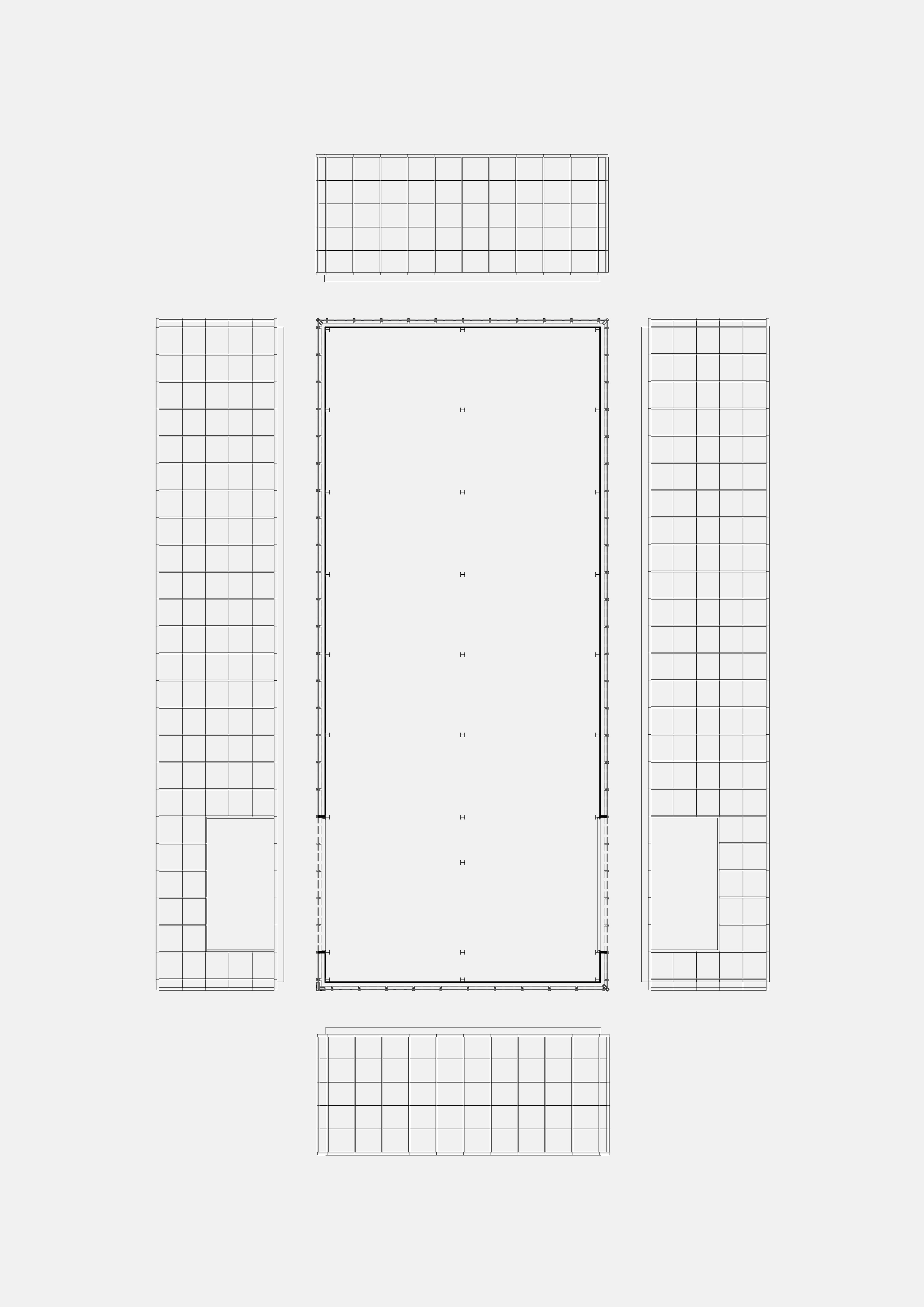
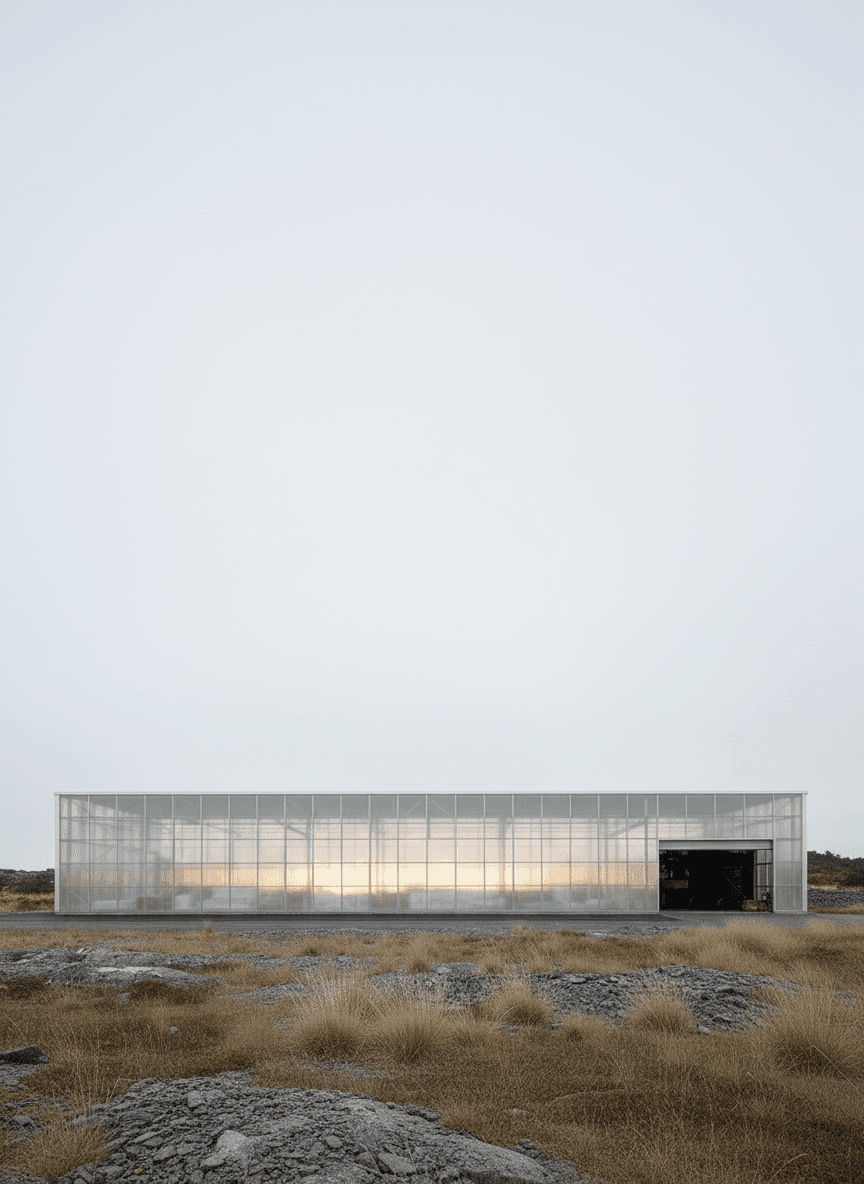
The Roast House is conceived as a refined industrial structure for the storage and handling of coffee, located within the exposed landscape of north Cornwall and designed for a local coffee manufacturer. The project explores beauty in industrial materials through a restrained architectural language that prioritises clarity, proportion, and material honesty. Expressed as a simple elongated volume, the building’s form is driven directly by operational requirements, structure, and environmental control rather than applied formal gestures. A lightweight, translucent envelope wraps a primary steel frame, allowing soft daylight to penetrate the interior while moderating the building’s presence within the surrounding landscape. By day the façade reads as calm and utilitarian; by night it becomes a gently illuminated container that reveals the rhythm of structure and use within. Industrial elements including steel framing, cladding panels, roller shutters, and concrete ground planes are left exposed and carefully detailed, reinforcing the building as a functional object shaped by necessity. Set against the rugged terrain of north Cornwall, the project balances infrastructural efficiency with a quiet sensitivity to place, demonstrating how industrial architecture can achieve an enduring and composed presence through simplicity, light, and material integrity.
ROAST HOUSE_01.JPG
ROAST HOUSE_02.JPG
ROAST HOUSE_03.JPG
ROAST HOUSE_05.JPG
ROAST HOUSE_06.JPG
ROAST HOUSE_07.JPG
ROAST HOUSE_08.JPG
ROAST HOUSE_04.JPG
Roast House
,
Architecture
,
2025
The Roast House is conceived as a refined industrial structure for the storage and handling of coffee, located within the exposed landscape of north Cornwall and designed for a local coffee manufacturer. The project explores beauty in industrial materials through a restrained architectural language that prioritises clarity, proportion, and material honesty. Expressed as a simple elongated volume, the building’s form is driven directly by operational requirements, structure, and environmental control rather than applied formal gestures. A lightweight, translucent envelope wraps a primary steel frame, allowing soft daylight to penetrate the interior while moderating the building’s presence within the surrounding landscape. By day the façade reads as calm and utilitarian; by night it becomes a gently illuminated container that reveals the rhythm of structure and use within. Industrial elements including steel framing, cladding panels, roller shutters, and concrete ground planes are left exposed and carefully detailed, reinforcing the building as a functional object shaped by necessity. Set against the rugged terrain of north Cornwall, the project balances infrastructural efficiency with a quiet sensitivity to place, demonstrating how industrial architecture can achieve an enduring and composed presence through simplicity, light, and material integrity.
ROAST HOUSE_01.JPG
ROAST HOUSE_02.JPG
ROAST HOUSE_03.JPG
ROAST HOUSE_05.JPG
ROAST HOUSE_06.JPG
ROAST HOUSE_07.JPG
ROAST HOUSE_08.JPG
ROAST HOUSE_04.JPG
Grey House
,
Residential
,
2025
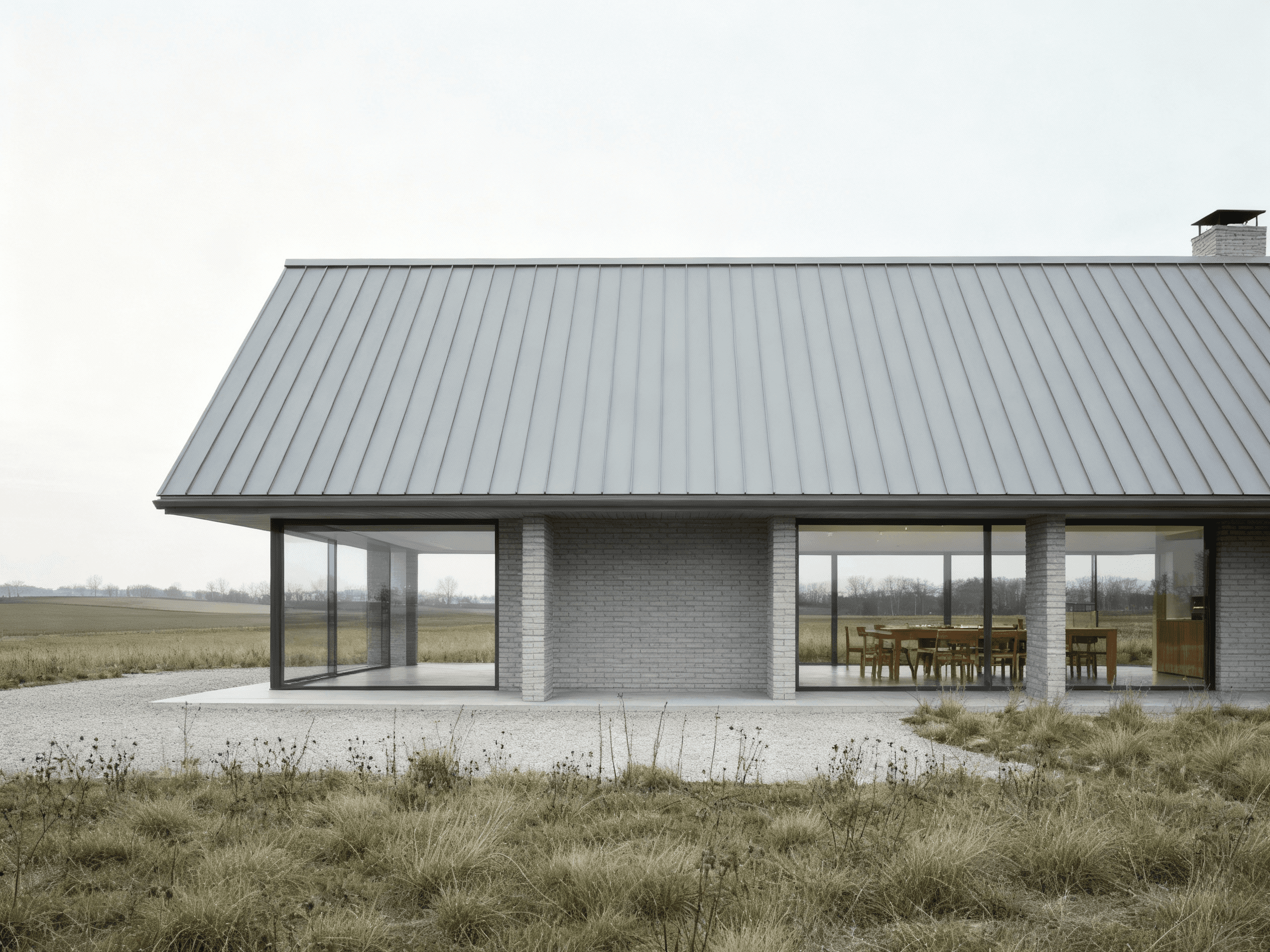
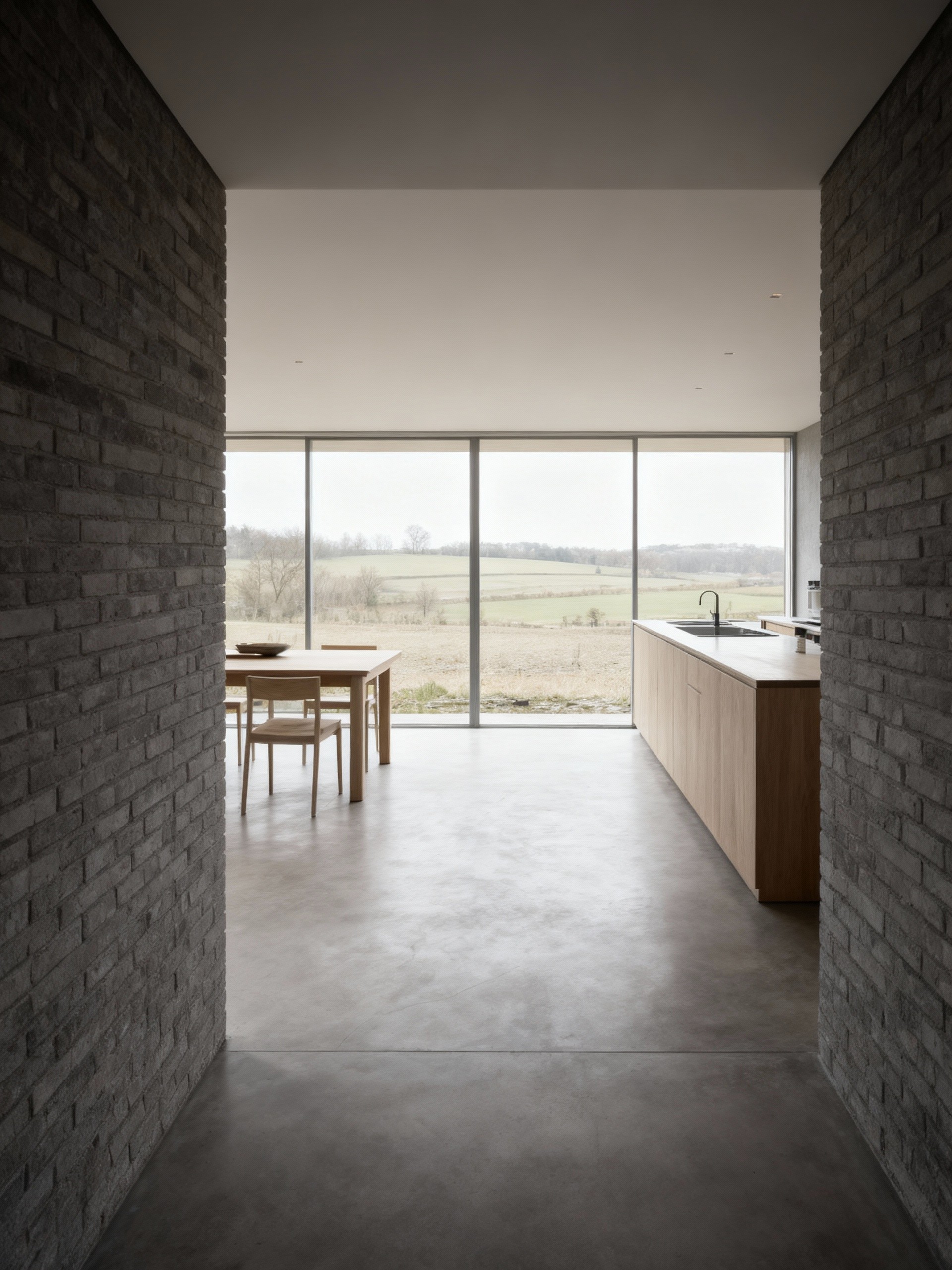
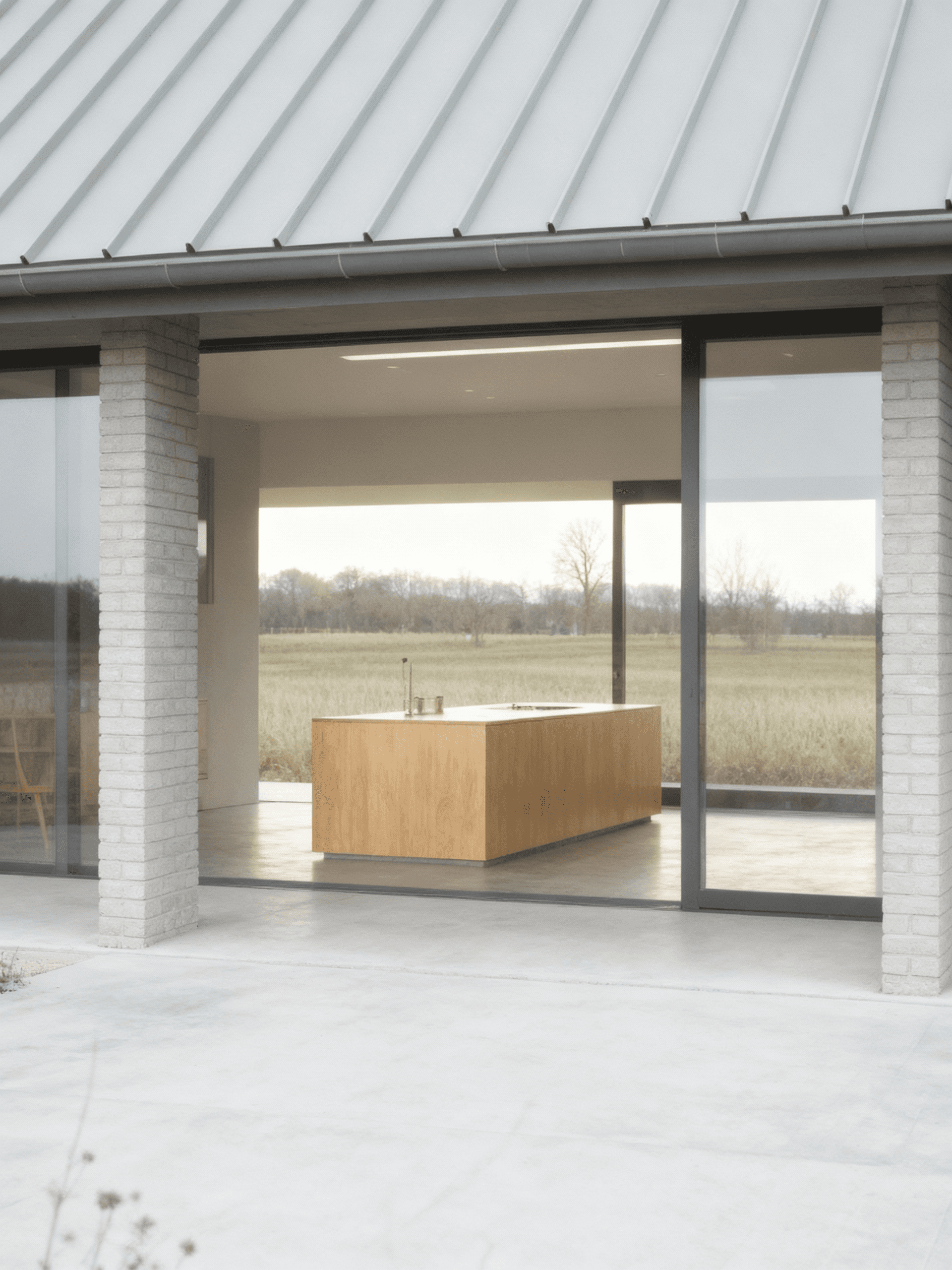
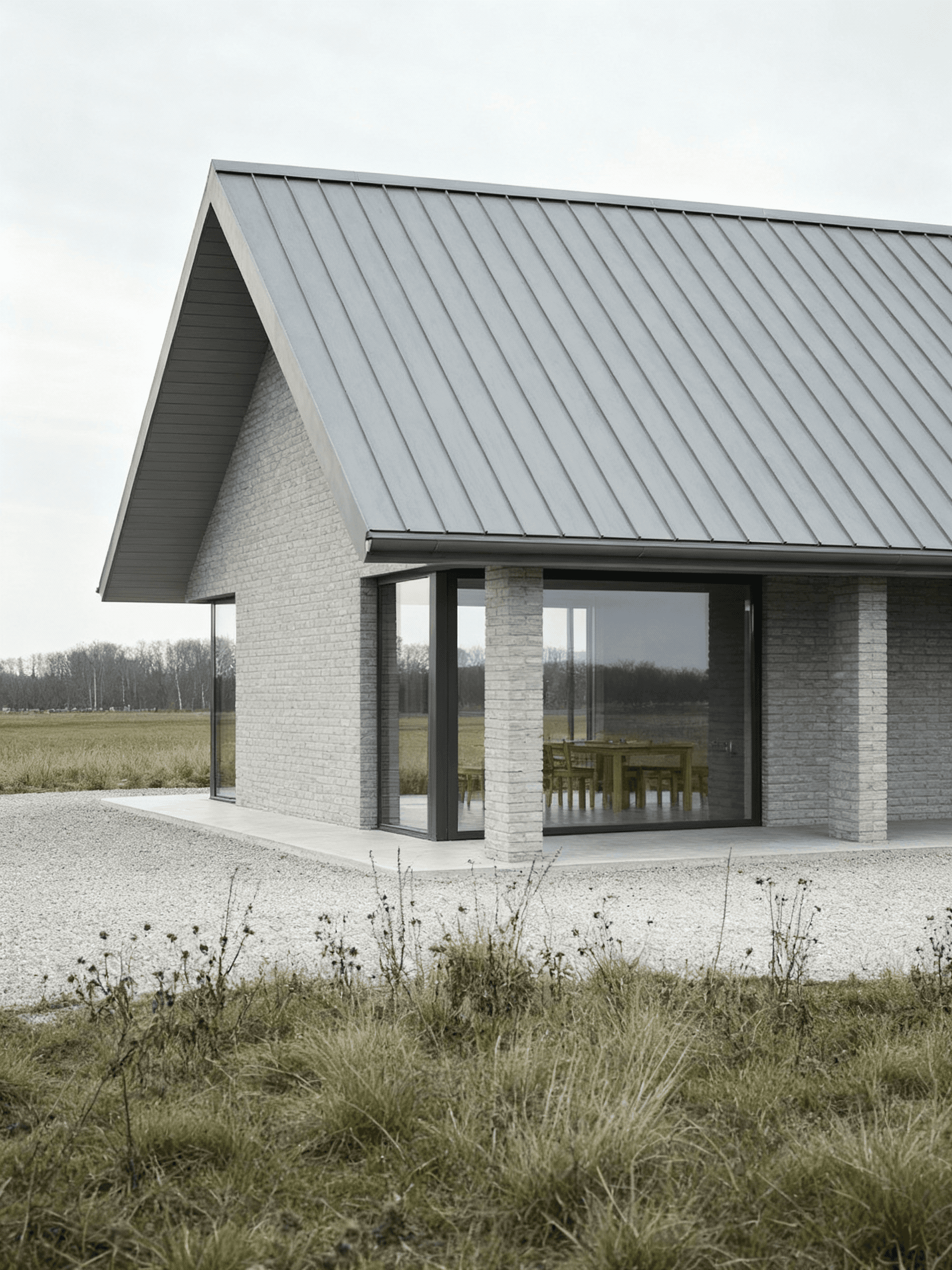
Grey House replaces a series of redundant agricultural barns with a single new dwelling that reinterprets the rural barn typology through a contemporary lens. Set within the rolling hills of the Devonshire countryside, the house adopts a quiet yet confident presence in the landscape. Its long, low form and crisp standing-seam metal roof draw from the agricultural vernacular, while refined detailing and material precision lend it a modern, architectural character. The open-plan interior is arranged around a dual-aspect kitchen, dining, and living space that frames expansive views across the site. Large-format glazing brings the landscape deep into the building, allowing light to move softly across the concrete floor and grey brick walls throughout the day. Externally, a palette of grey brick, concrete, and timber is complemented by aluminium-framed glazing and a matte metal roof, creating a dialogue between raw texture and refined finish. A light gravel pathway leads up to the house, cutting cleanly through the wild grass field, forming a calm threshold between building and terrain.
GREY HOUSE_01.jpg
GREY HOUSE_02.jpg
GREY HOUSE_03.jpg
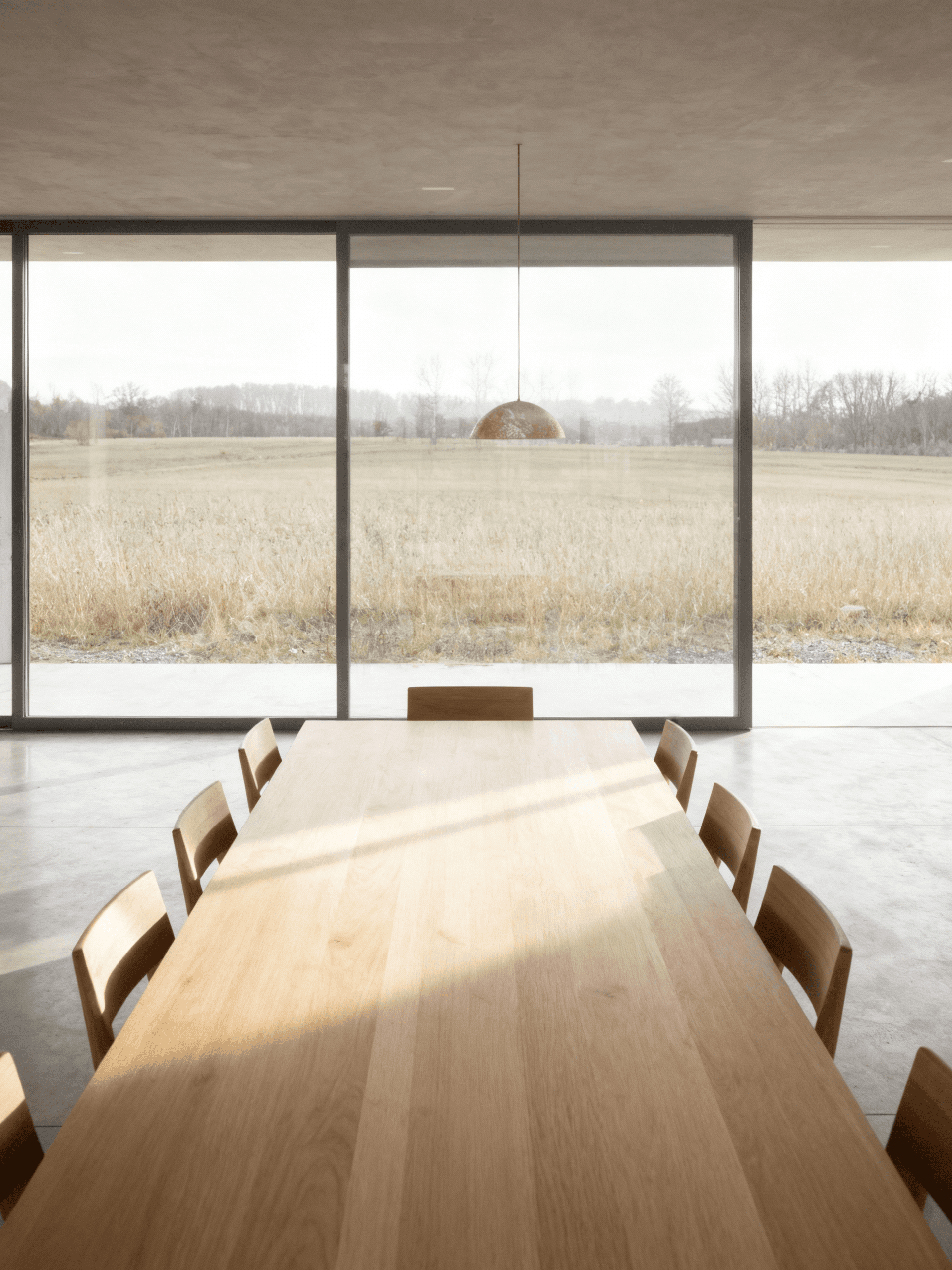
GREY HOUSE_05.jpg
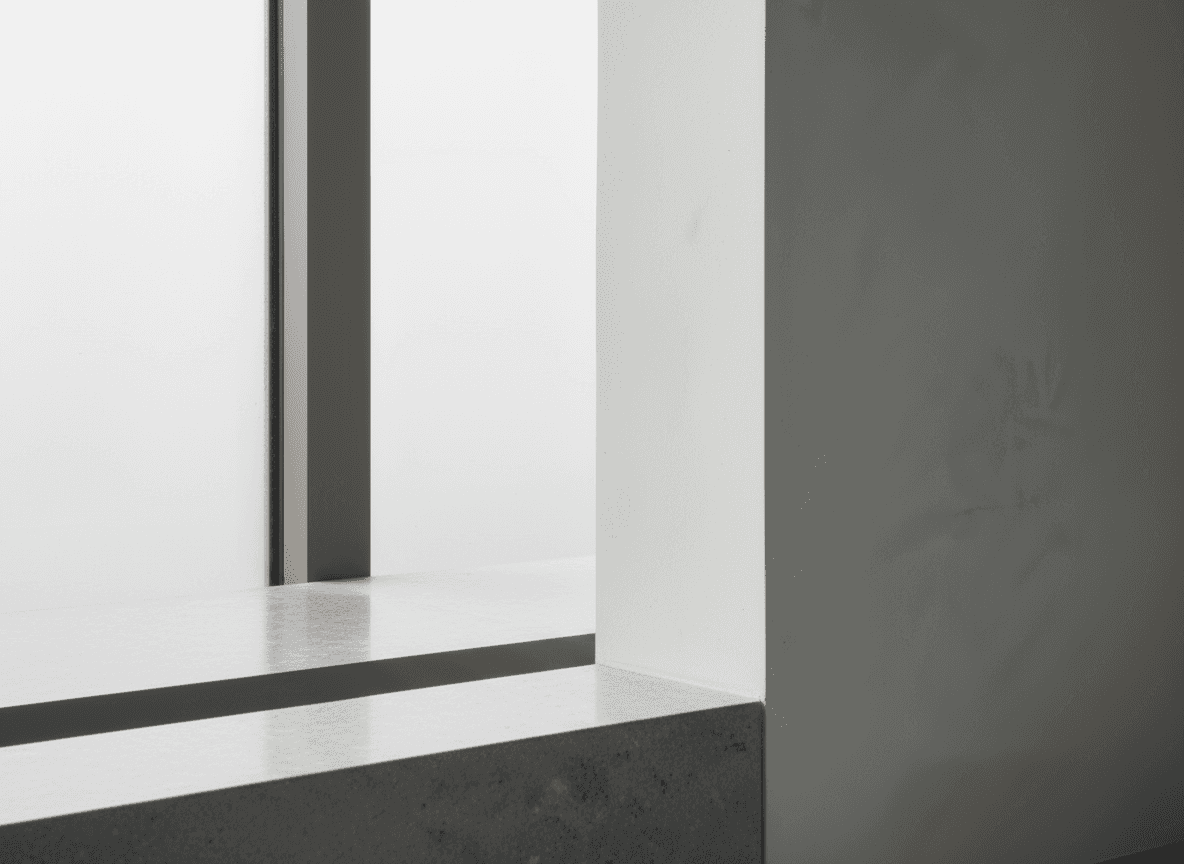
GREY HOUSE_06.jpg
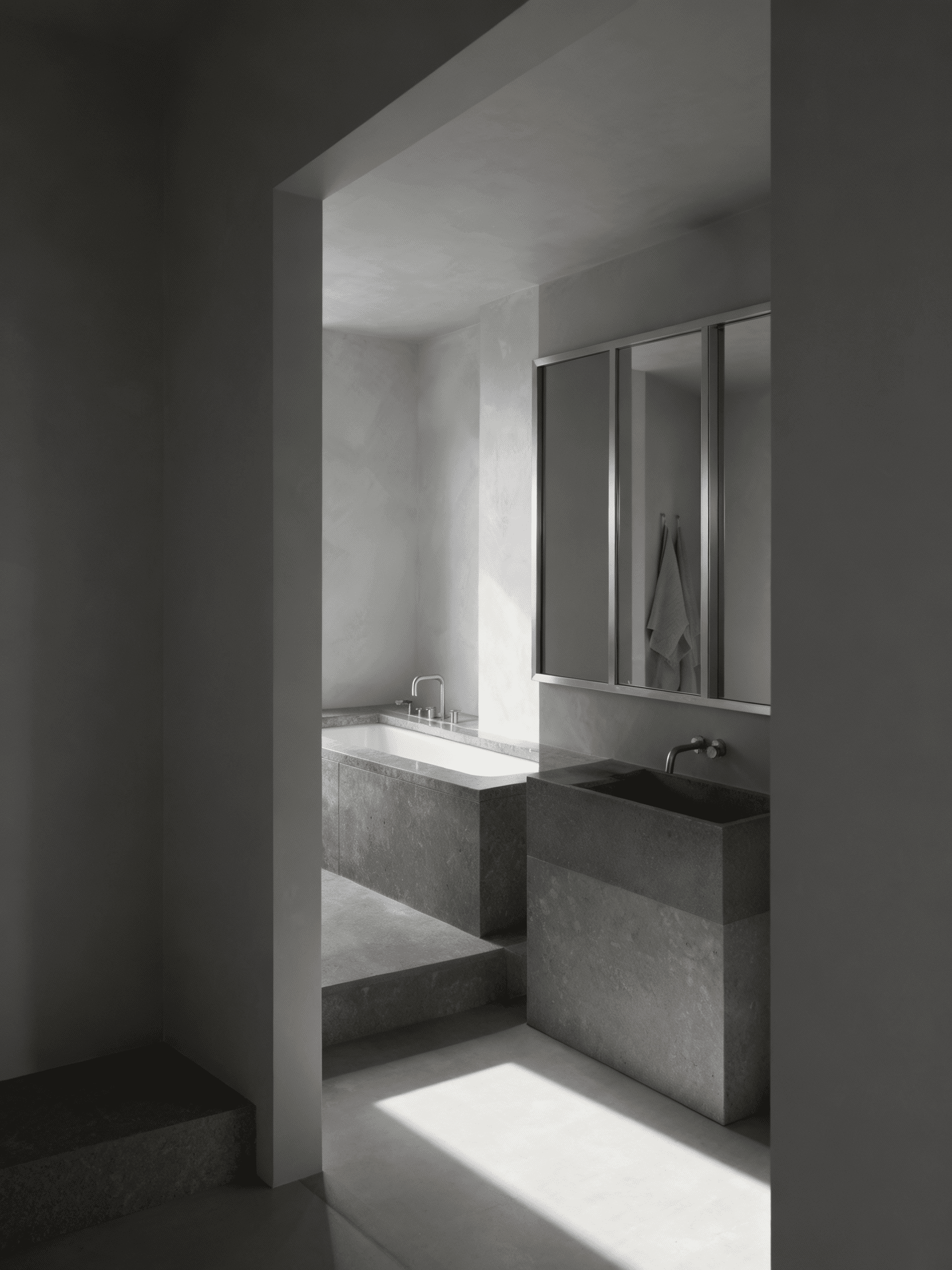
GREY HOUSE_07.jpg
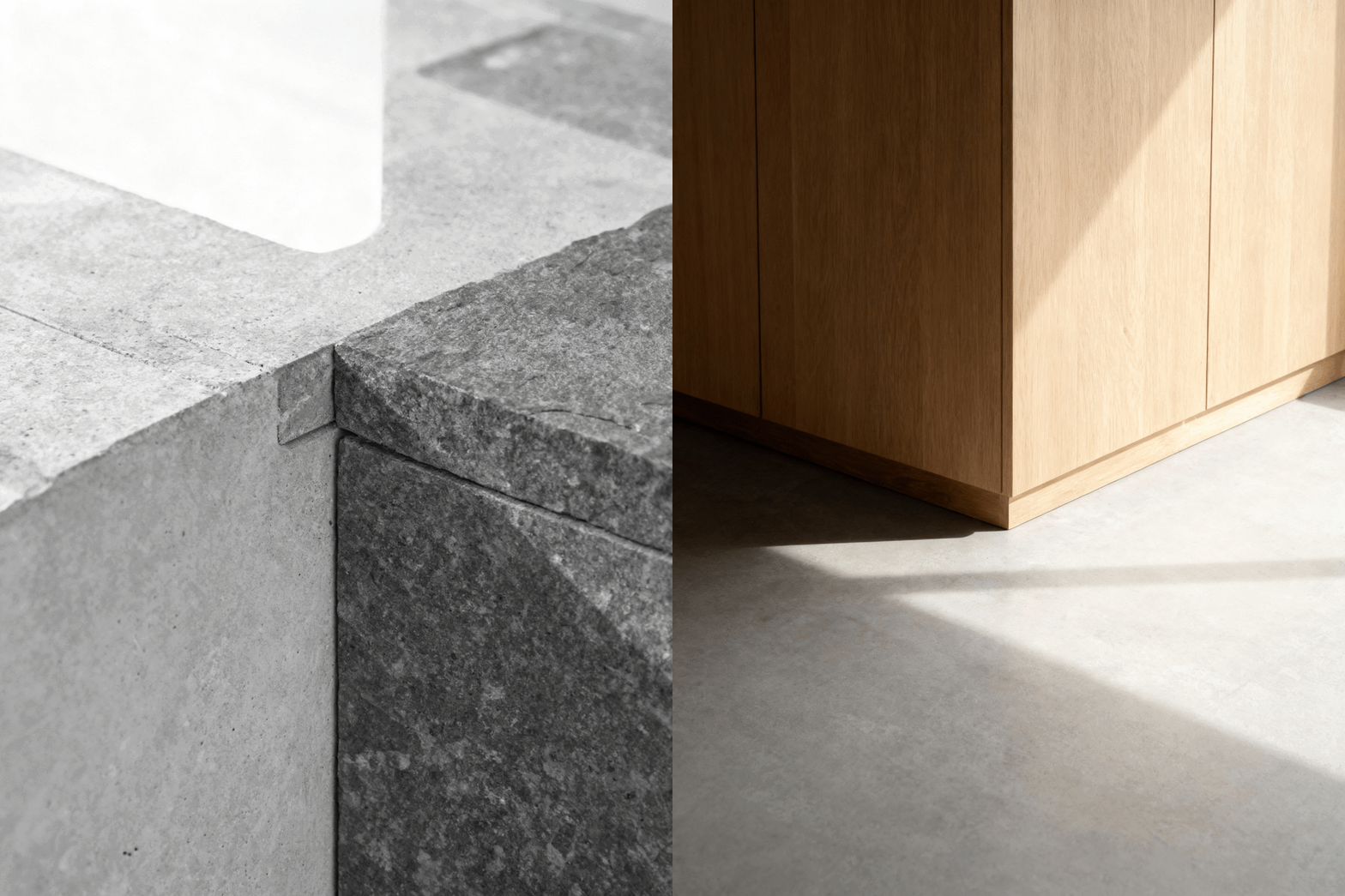
GREY HOUSE_08.mp4
GREY HOUSE_09.jpg
GREY HOUSE_10.jpg
GREY HOUSE_04.jpg
Grey House
,
Residential
,
2025
Grey House replaces a series of redundant agricultural barns with a single new dwelling that reinterprets the rural barn typology through a contemporary lens. Set within the rolling hills of the Devonshire countryside, the house adopts a quiet yet confident presence in the landscape. Its long, low form and crisp standing-seam metal roof draw from the agricultural vernacular, while refined detailing and material precision lend it a modern, architectural character. The open-plan interior is arranged around a dual-aspect kitchen, dining, and living space that frames expansive views across the site. Large-format glazing brings the landscape deep into the building, allowing light to move softly across the concrete floor and grey brick walls throughout the day. Externally, a palette of grey brick, concrete, and timber is complemented by aluminium-framed glazing and a matte metal roof, creating a dialogue between raw texture and refined finish. A light gravel pathway leads up to the house, cutting cleanly through the wild grass field, forming a calm threshold between building and terrain.
GREY HOUSE_01.jpg
GREY HOUSE_02.jpg
GREY HOUSE_03.jpg
GREY HOUSE_05.jpg
GREY HOUSE_06.jpg
GREY HOUSE_07.jpg
GREY HOUSE_08.mp4
GREY HOUSE_09.jpg
GREY HOUSE_10.jpg
GREY HOUSE_04.jpg
Red Corner House
,
Architecture
,
2025
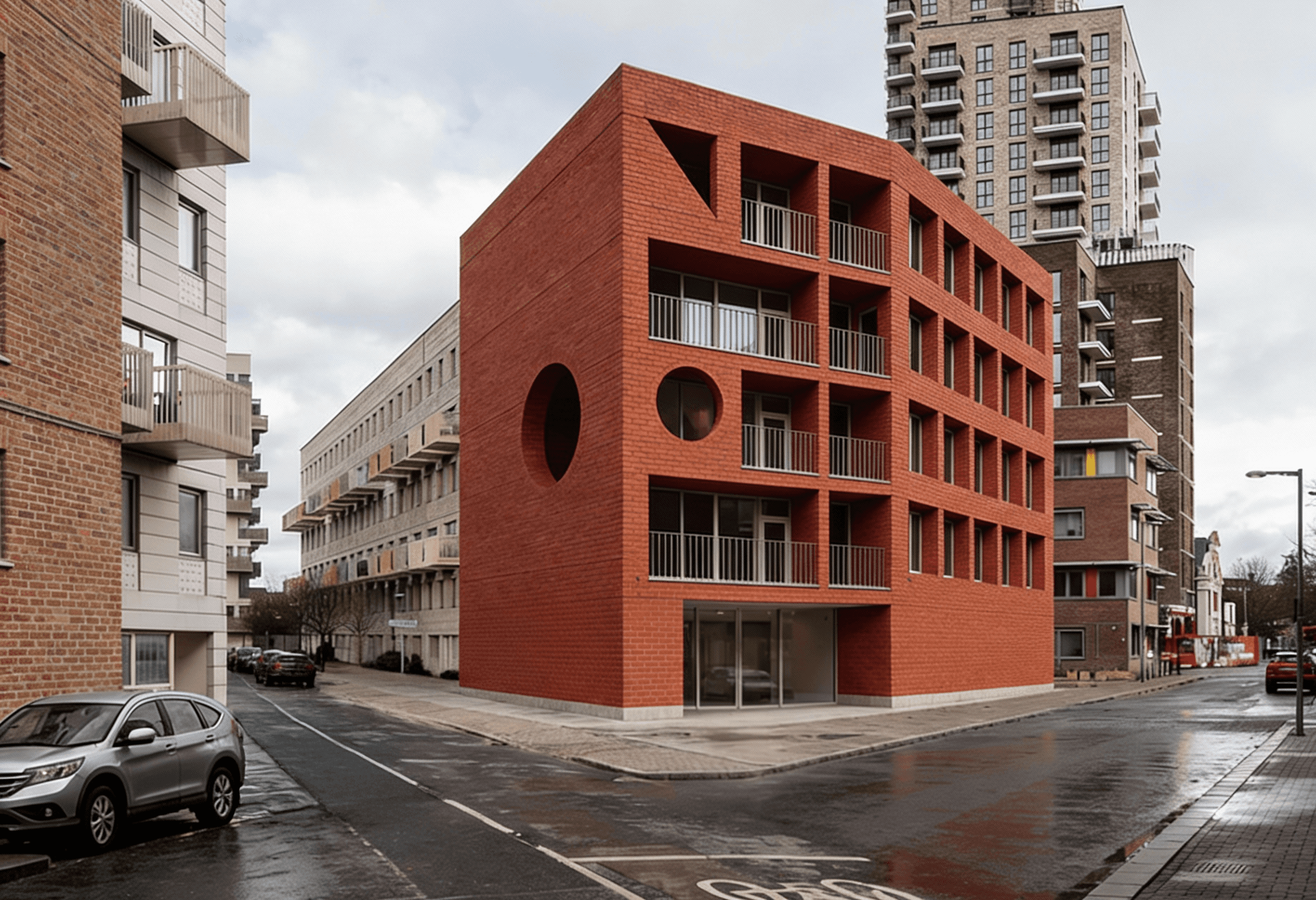
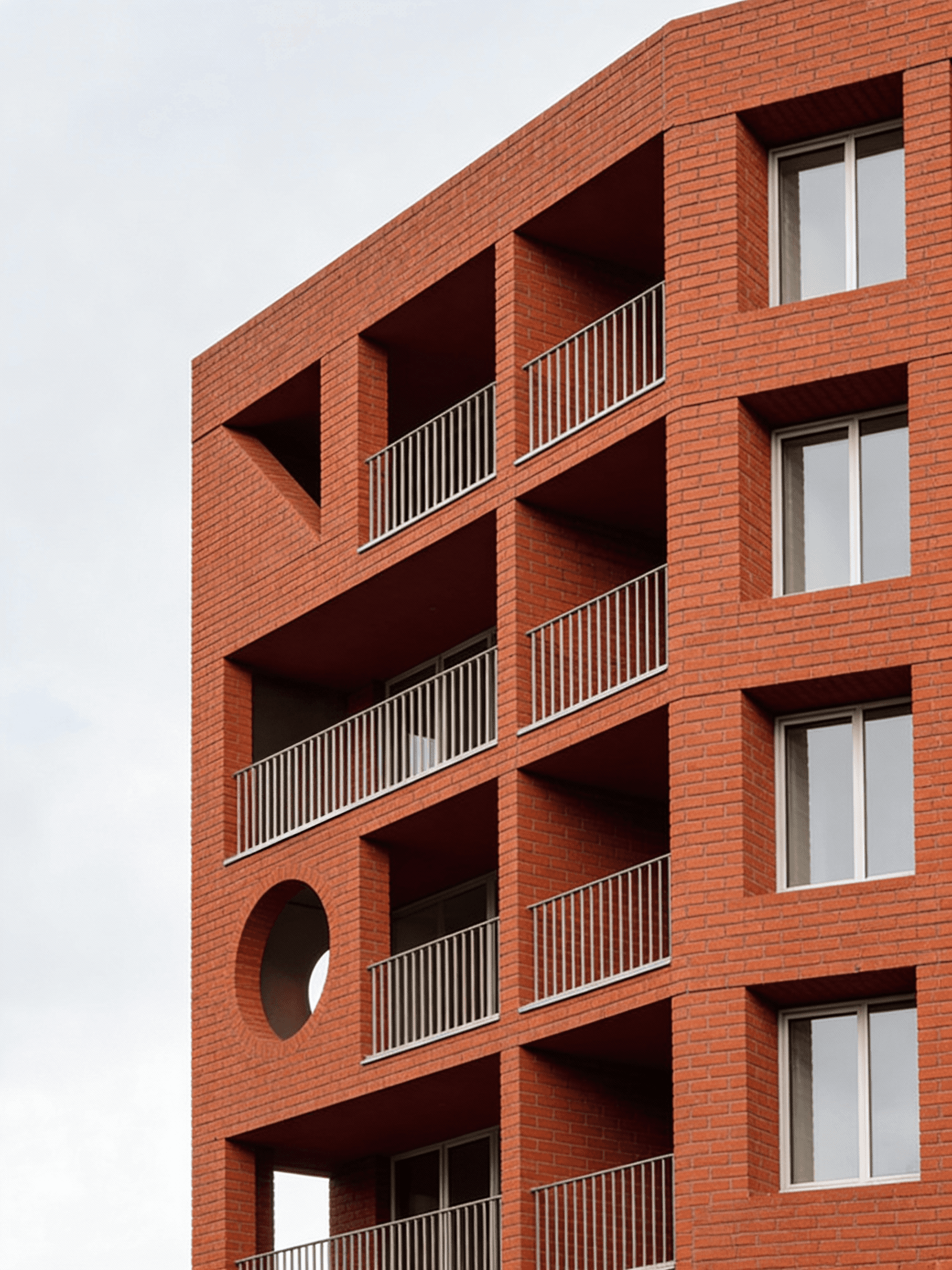
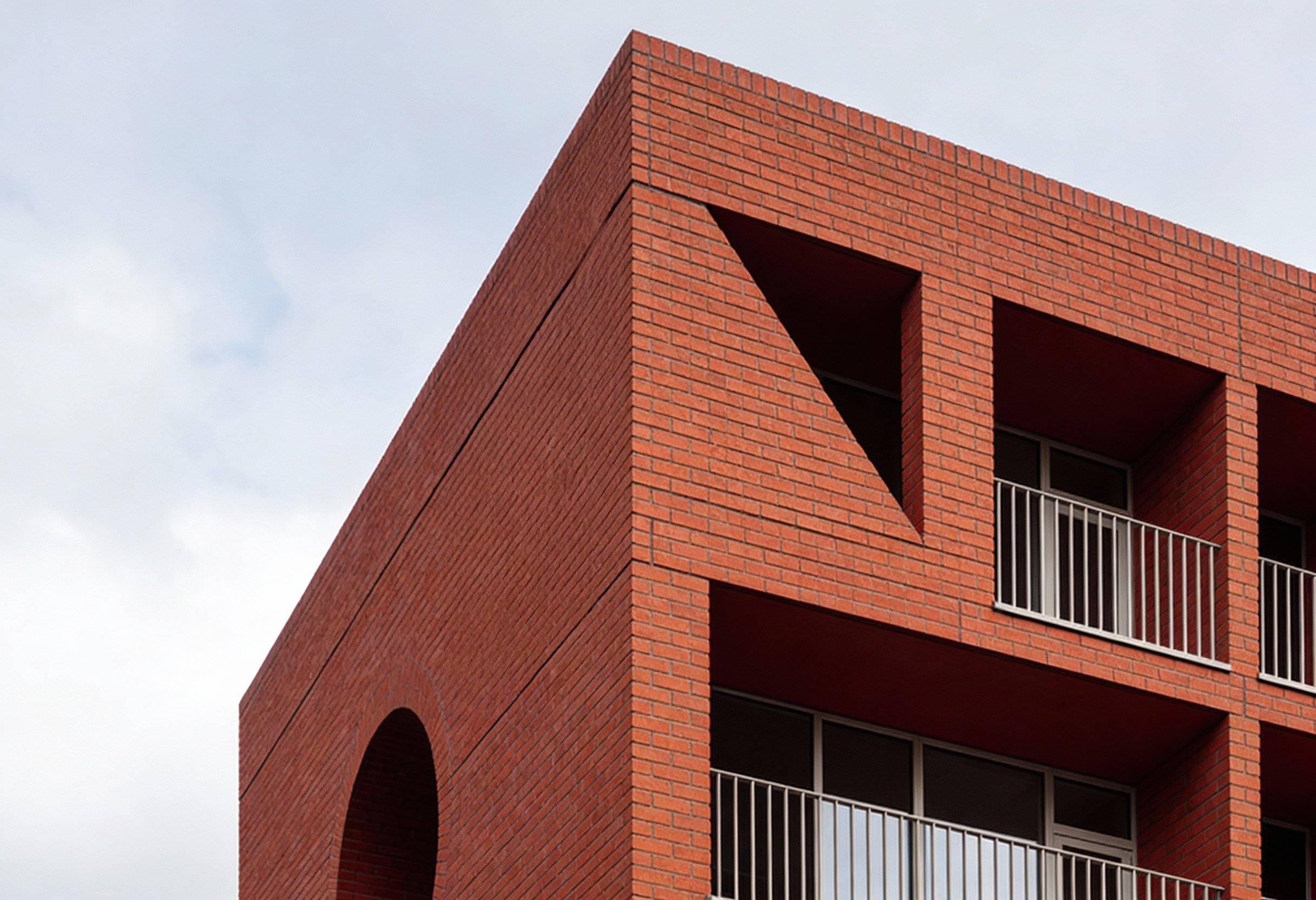
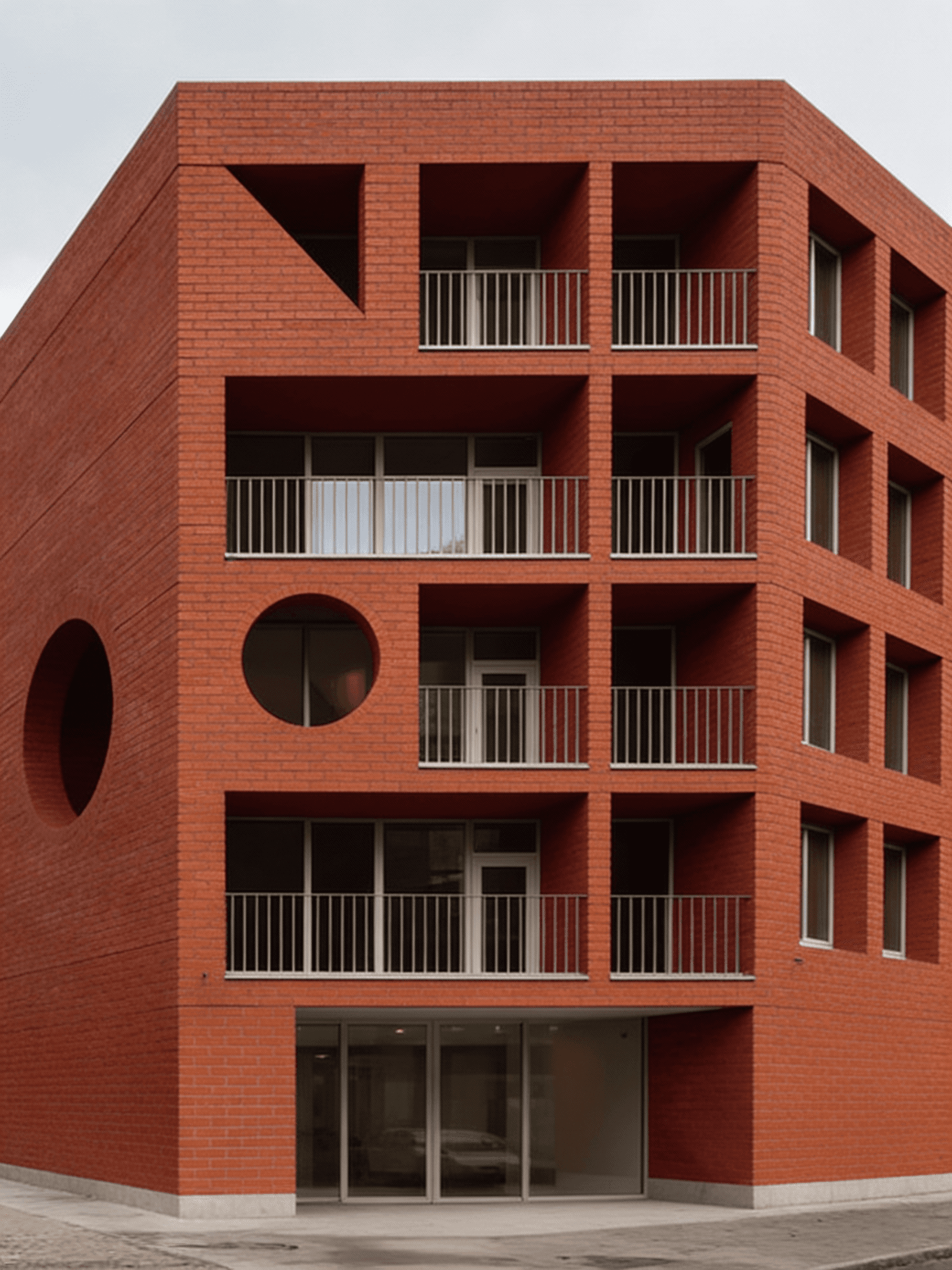
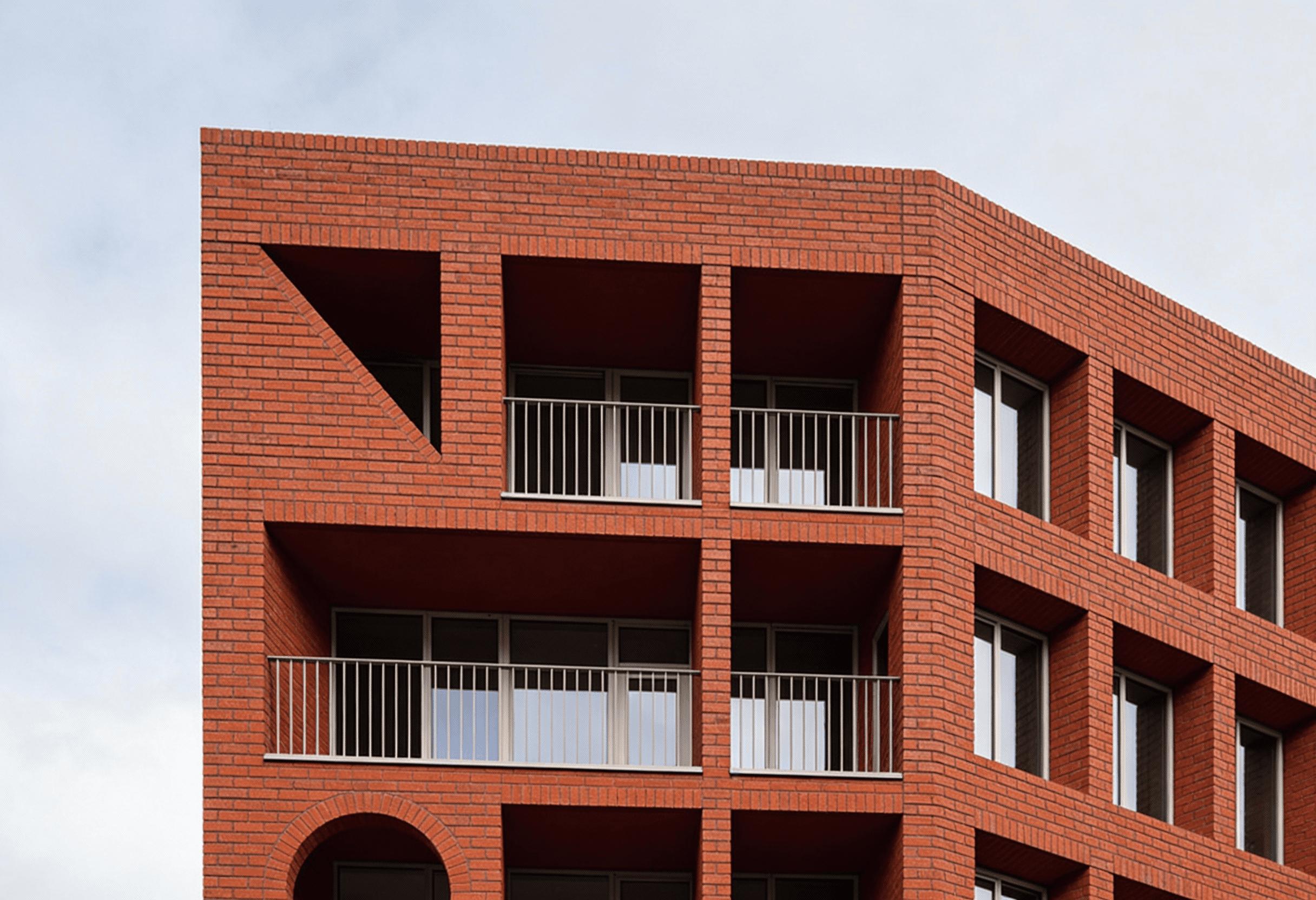
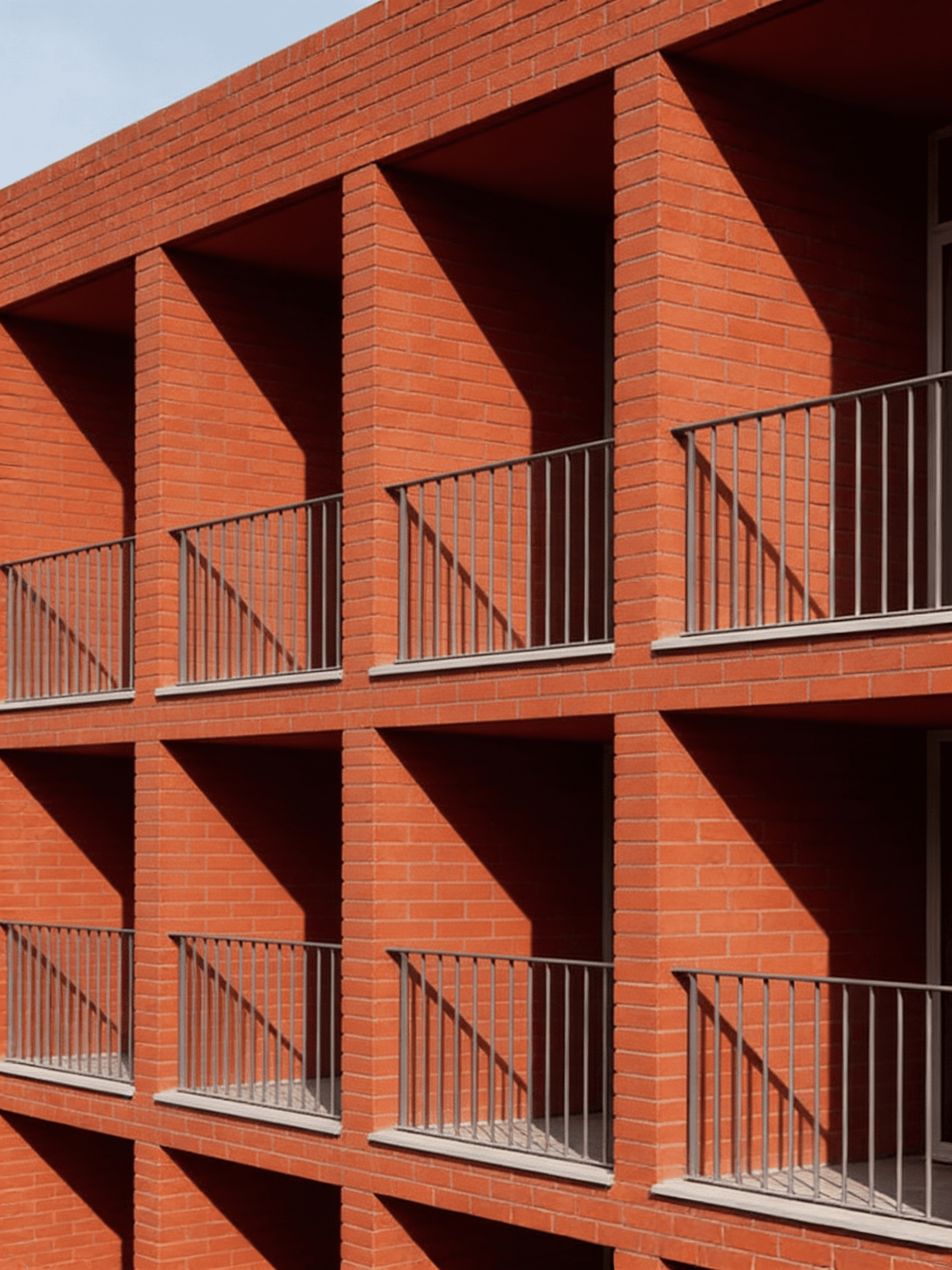
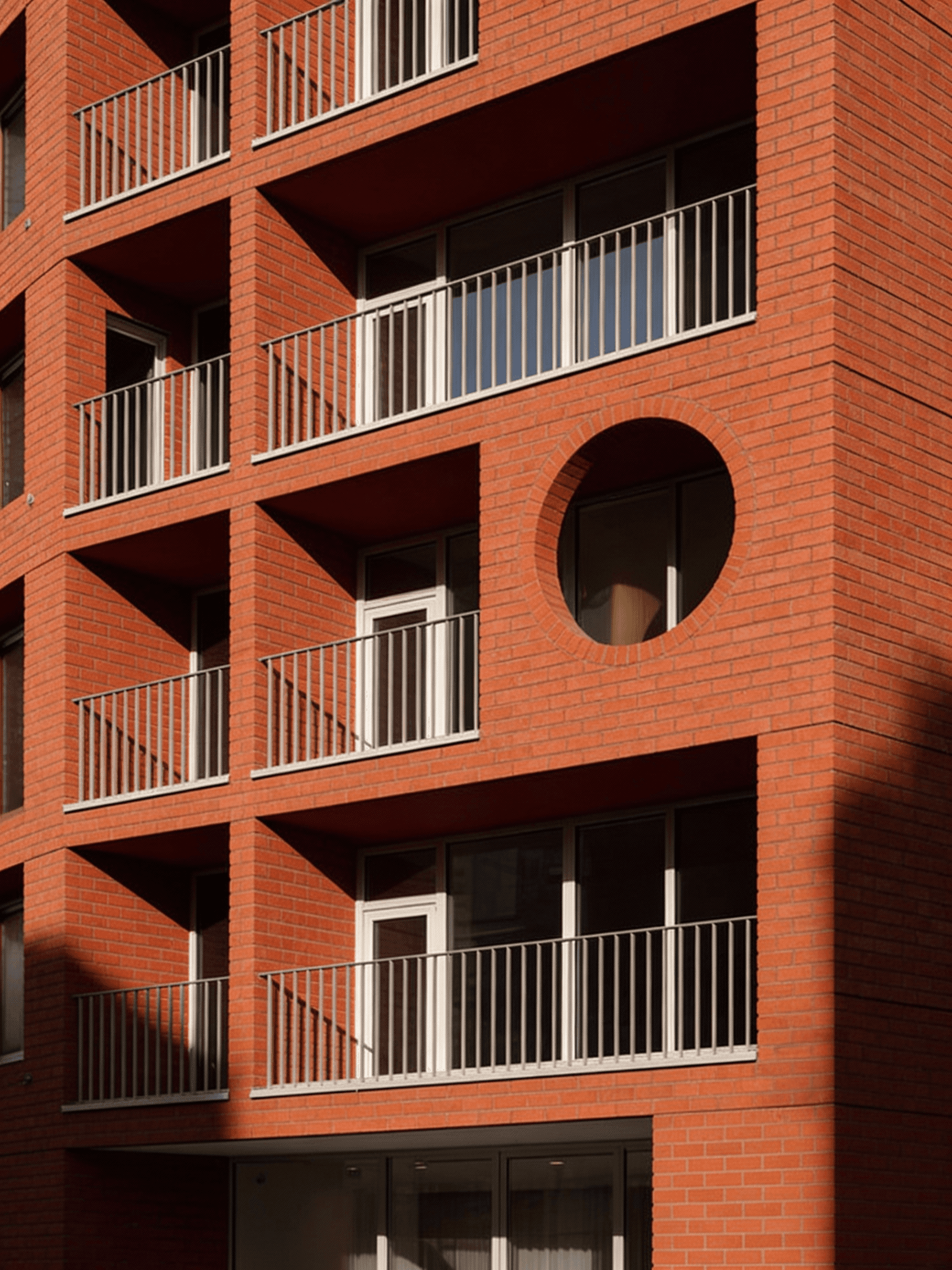
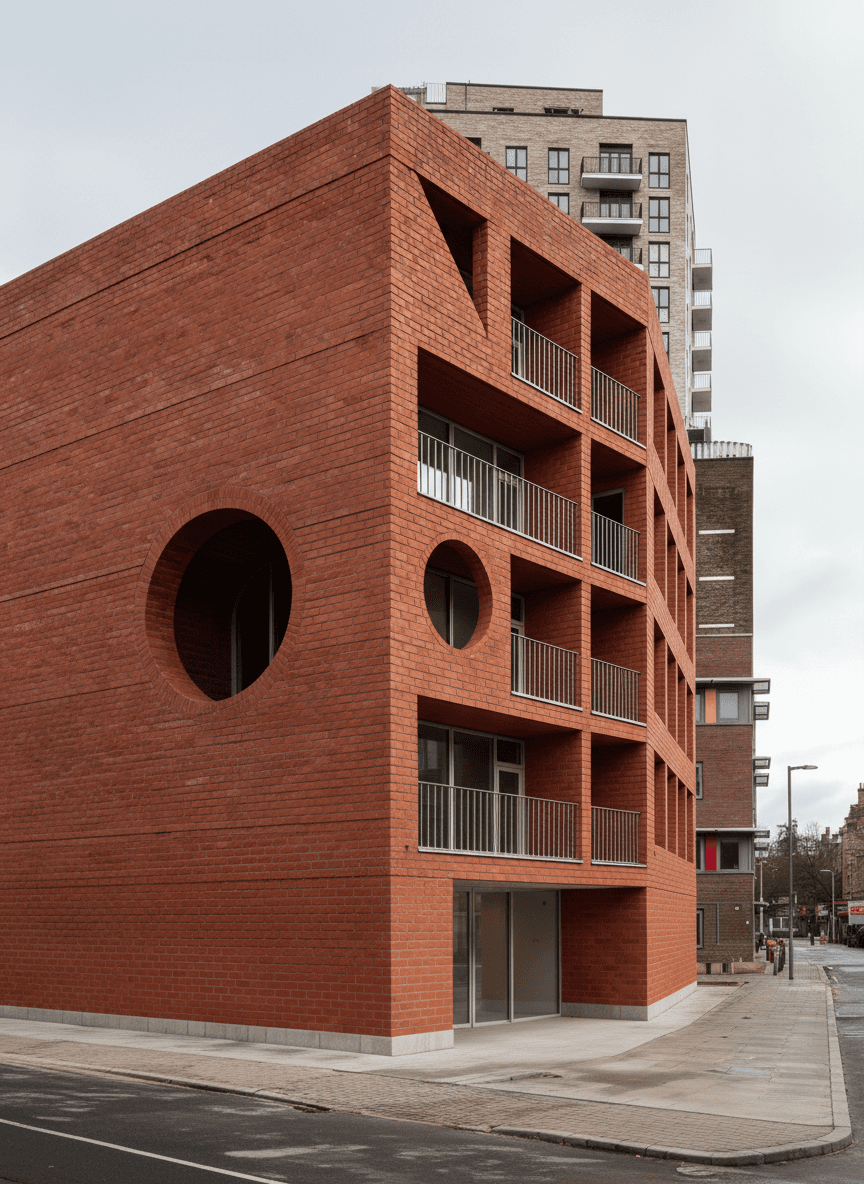
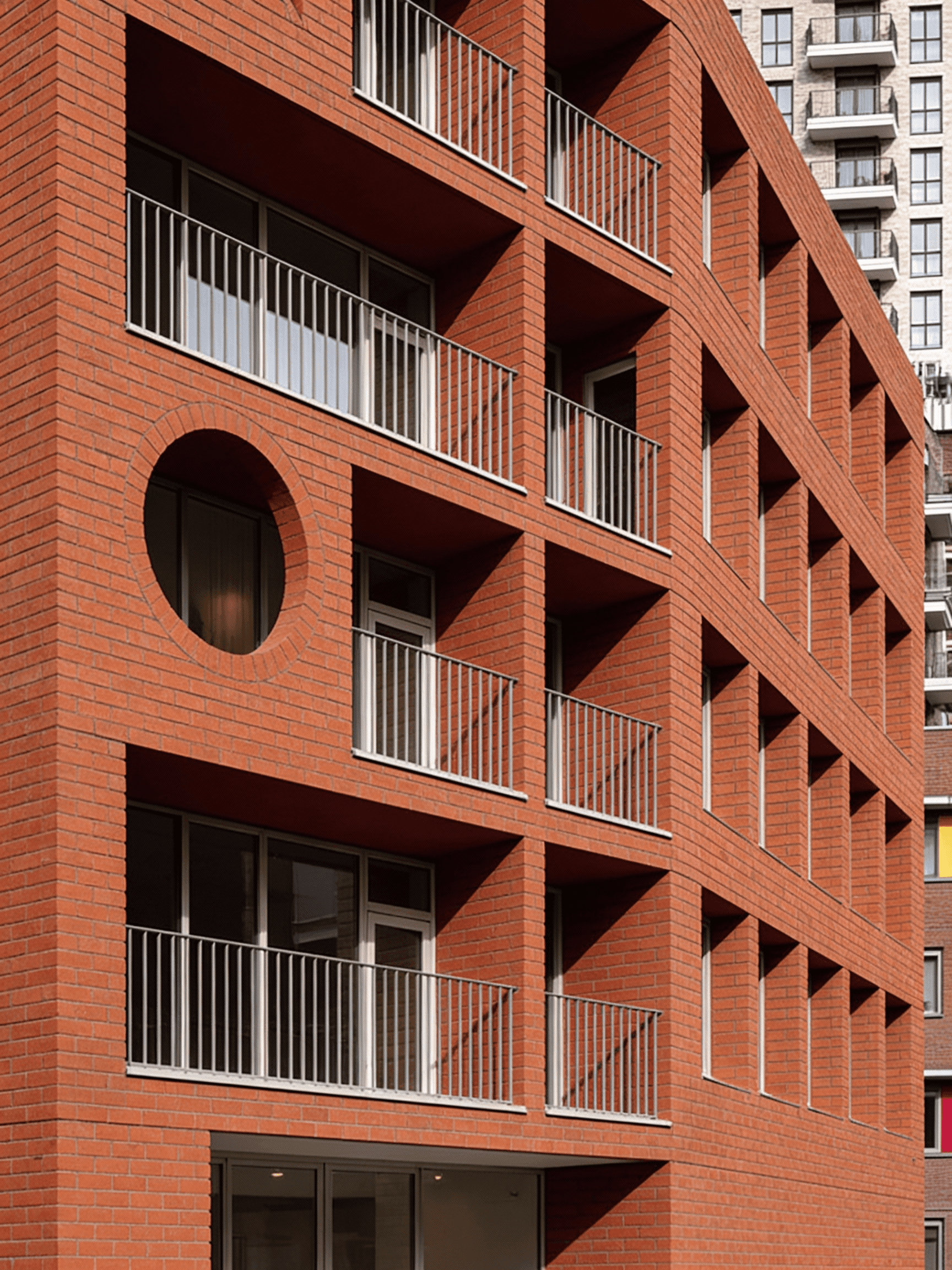
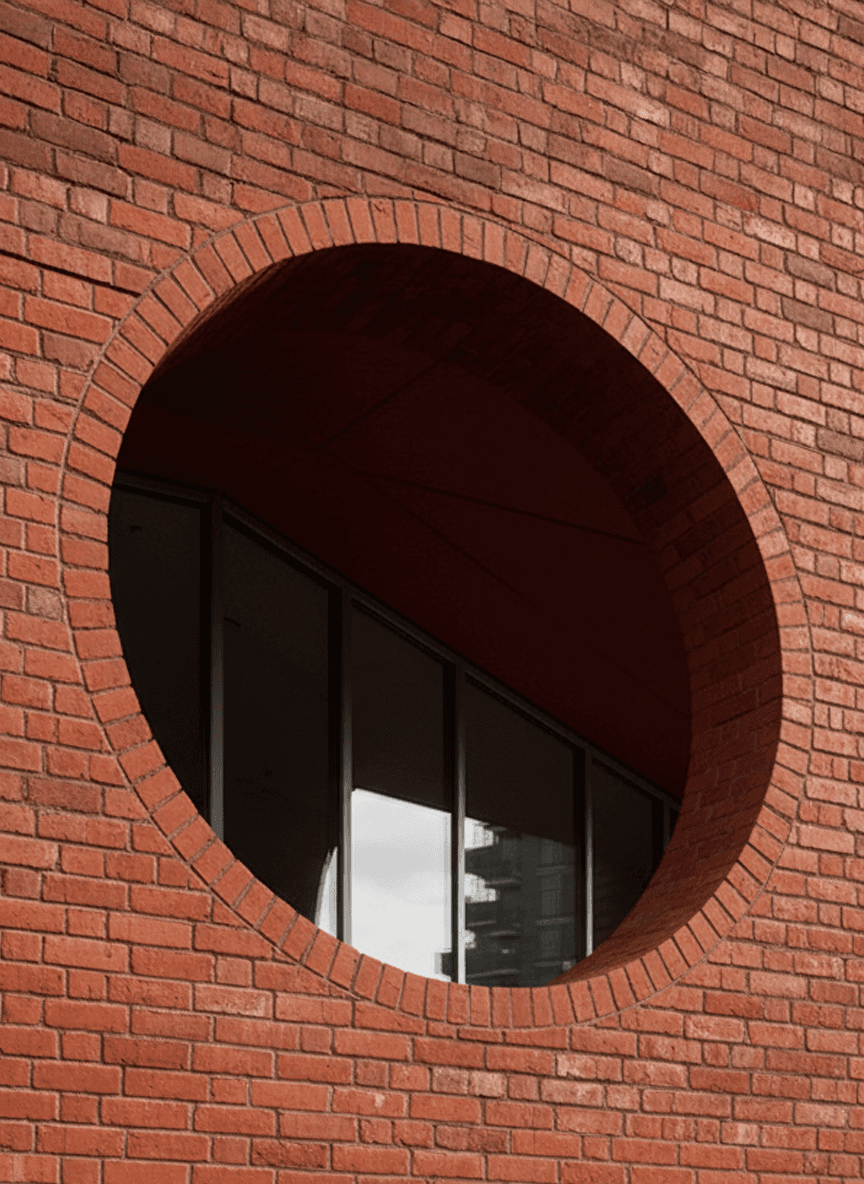
This residential building is conceived as a contemporary interpretation of early modernist principles, expressed through a disciplined use of red brick and the careful articulation of primary geometric forms. Located on a prominent urban corner in east London, the building is defined by circular and arched punctuations carved into the façade, creating moments of depth, shadow, and visual relief within an otherwise robust masonry volume. These openings are not applied decoration but integral architectural gestures that mediate between structure, light, and inhabitation. Recessed balconies and a sheltered ground floor entrance are carved from the mass, reinforcing the reading of the building as a solid form shaped by voids. The project balances monumentality with domestic scale, drawing on early modernist ideas of clarity, proportion, and material honesty while responding directly to its London context.
Red Corner_01.jpg
Red Corner_02.jpg
Red Corner_03.jpg
Red Corner_05.jpg
Red Corner_06.jpg
Red Corner_07.jpg
Red Corner_08.jpg
Red Corner_09.jpg
Red Corner_10.jpg
Red Corner_04.jpg
Red Corner House
,
Architecture
,
2025
This residential building is conceived as a contemporary interpretation of early modernist principles, expressed through a disciplined use of red brick and the careful articulation of primary geometric forms. Located on a prominent urban corner in east London, the building is defined by circular and arched punctuations carved into the façade, creating moments of depth, shadow, and visual relief within an otherwise robust masonry volume. These openings are not applied decoration but integral architectural gestures that mediate between structure, light, and inhabitation. Recessed balconies and a sheltered ground floor entrance are carved from the mass, reinforcing the reading of the building as a solid form shaped by voids. The project balances monumentality with domestic scale, drawing on early modernist ideas of clarity, proportion, and material honesty while responding directly to its London context.
Red Corner_01.jpg
Red Corner_02.jpg
Red Corner_03.jpg
Red Corner_05.jpg
Red Corner_06.jpg
Red Corner_07.jpg
Red Corner_08.jpg
Red Corner_09.jpg
Red Corner_10.jpg
Red Corner_04.jpg
Void and Light
,
Architecture
,
2024
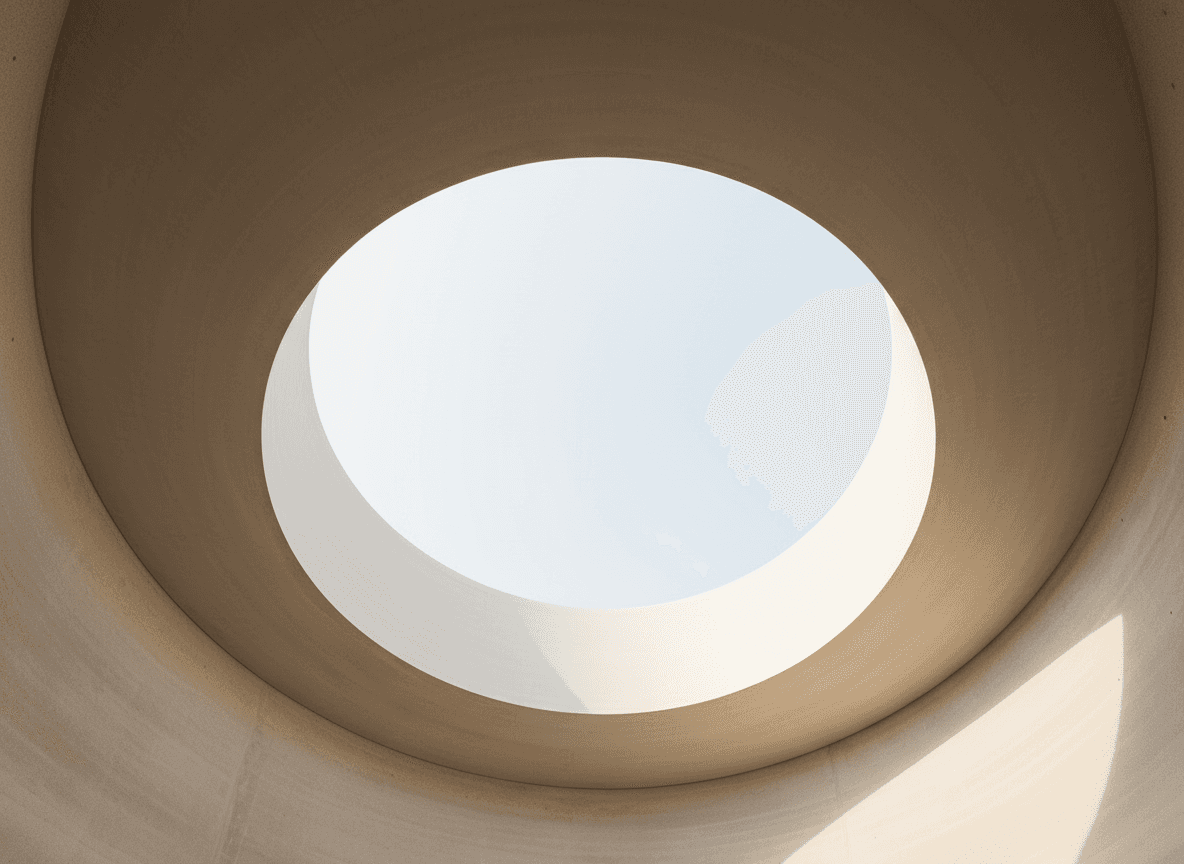
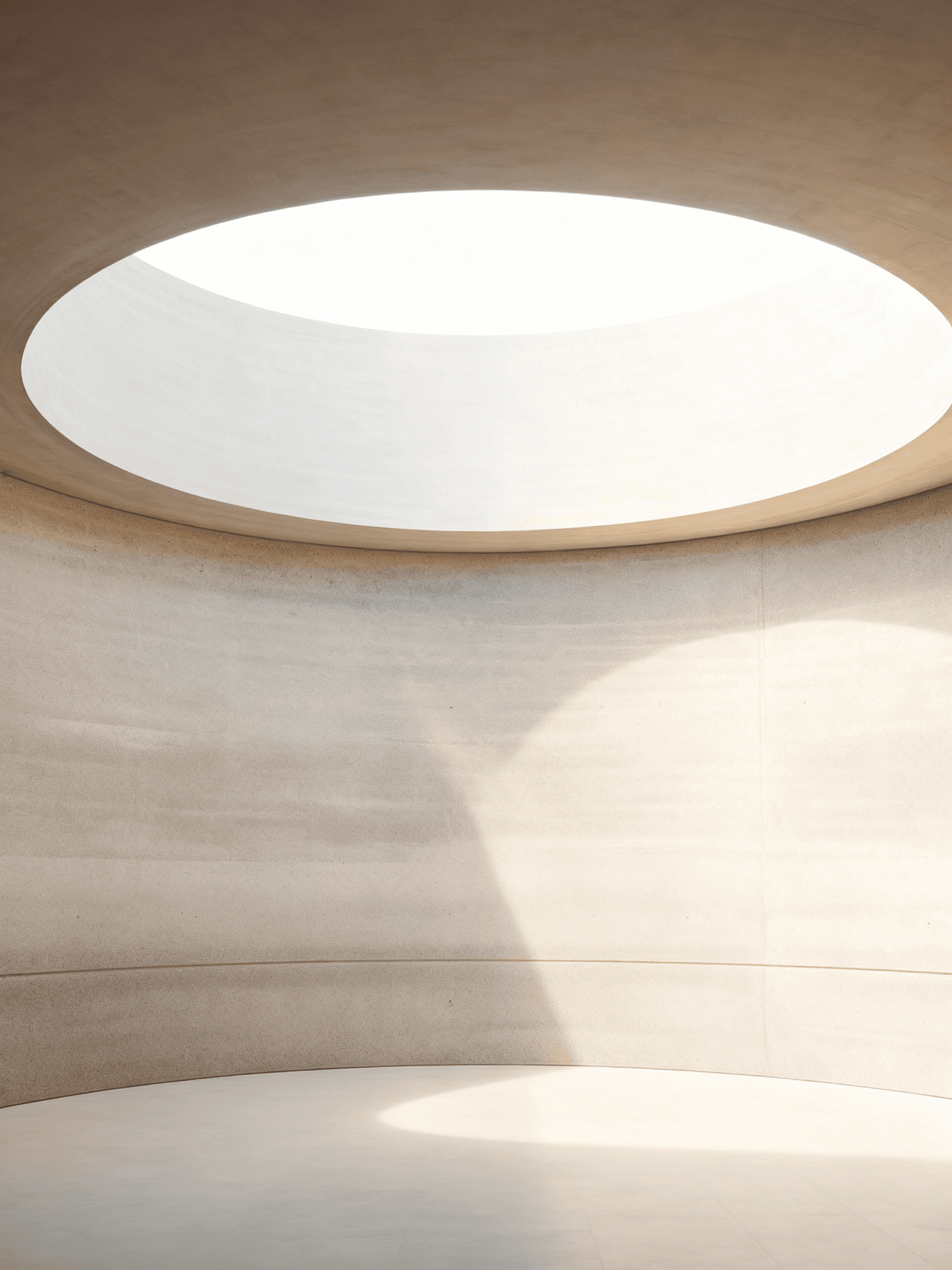
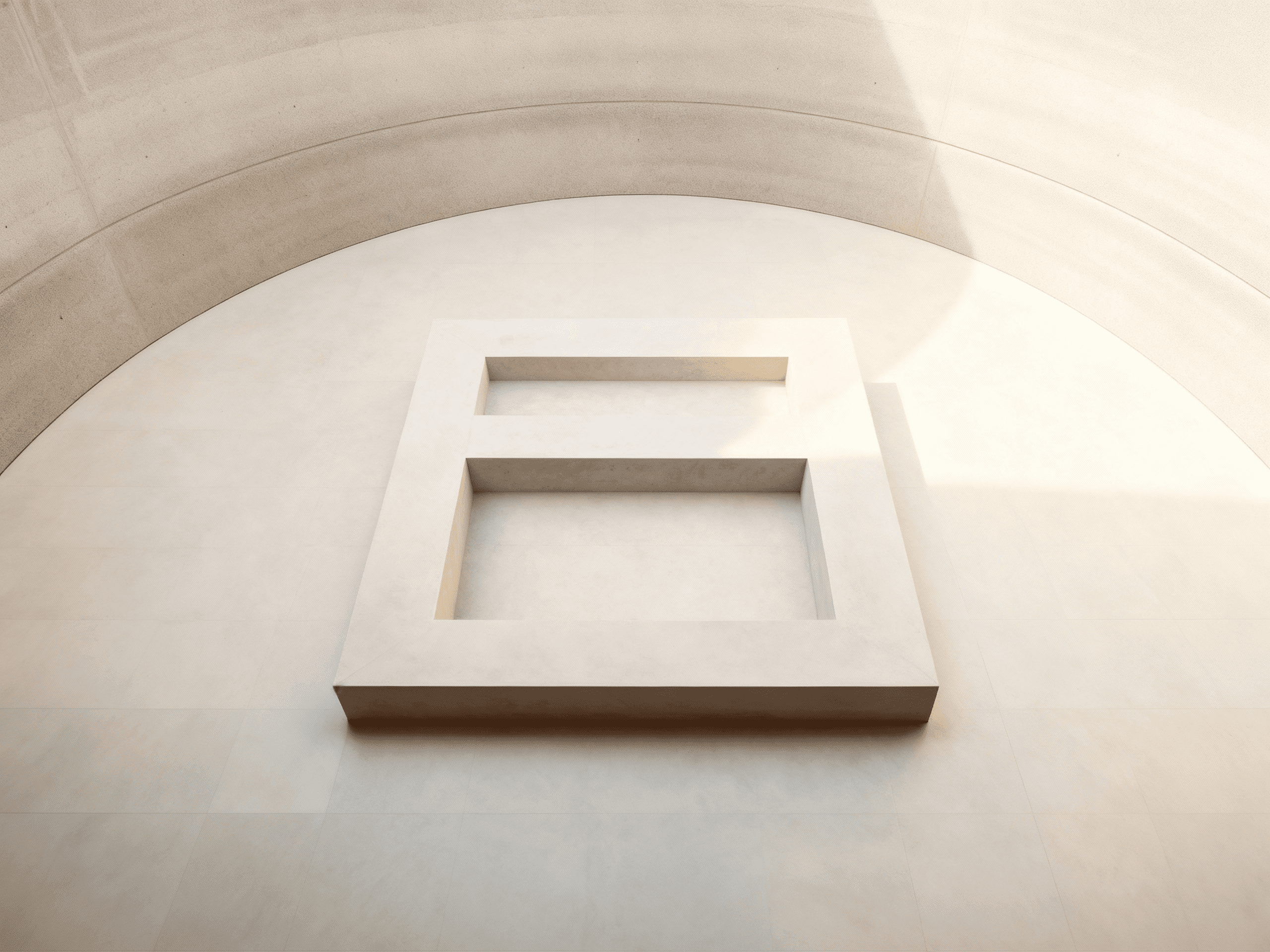
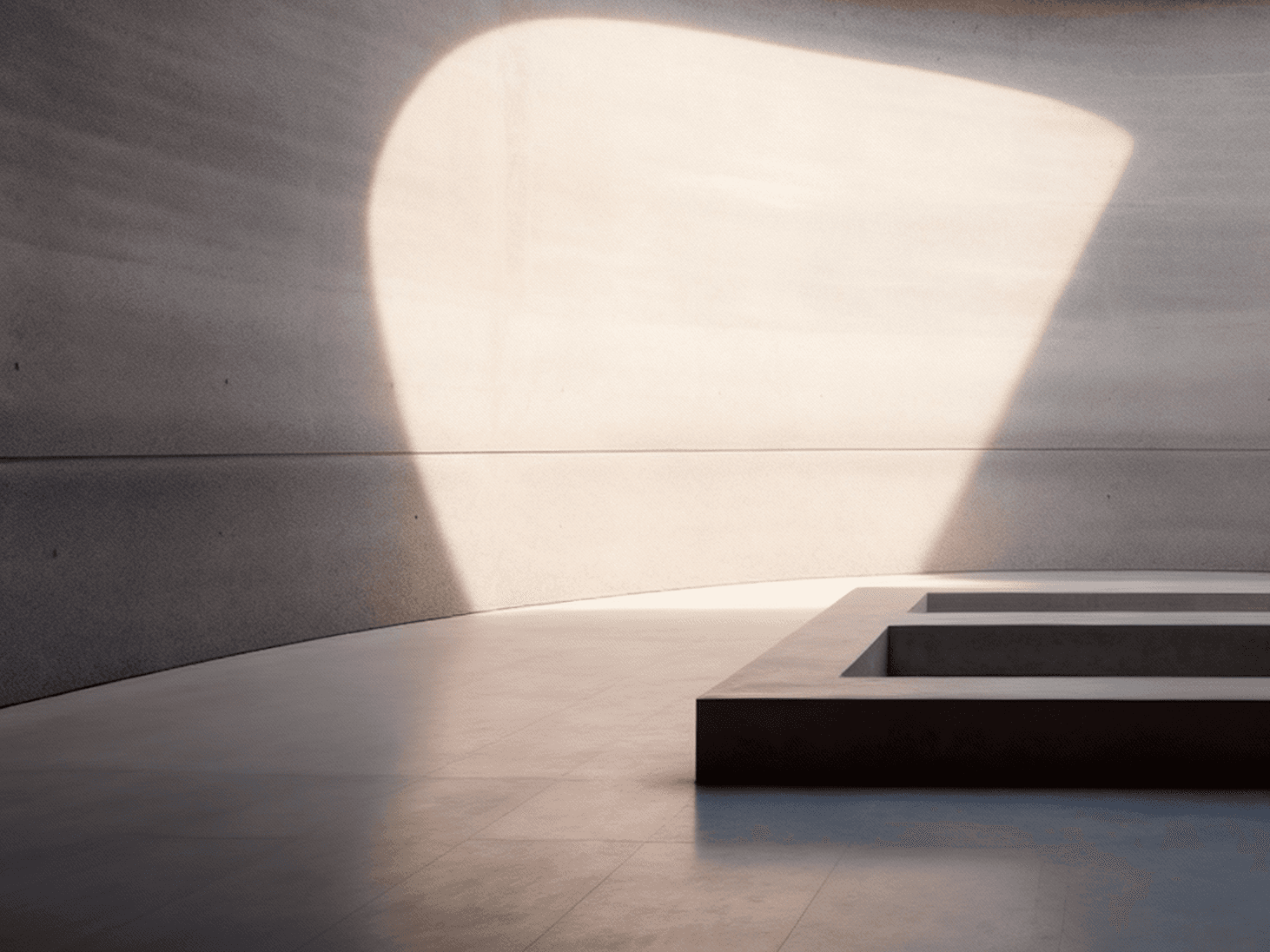
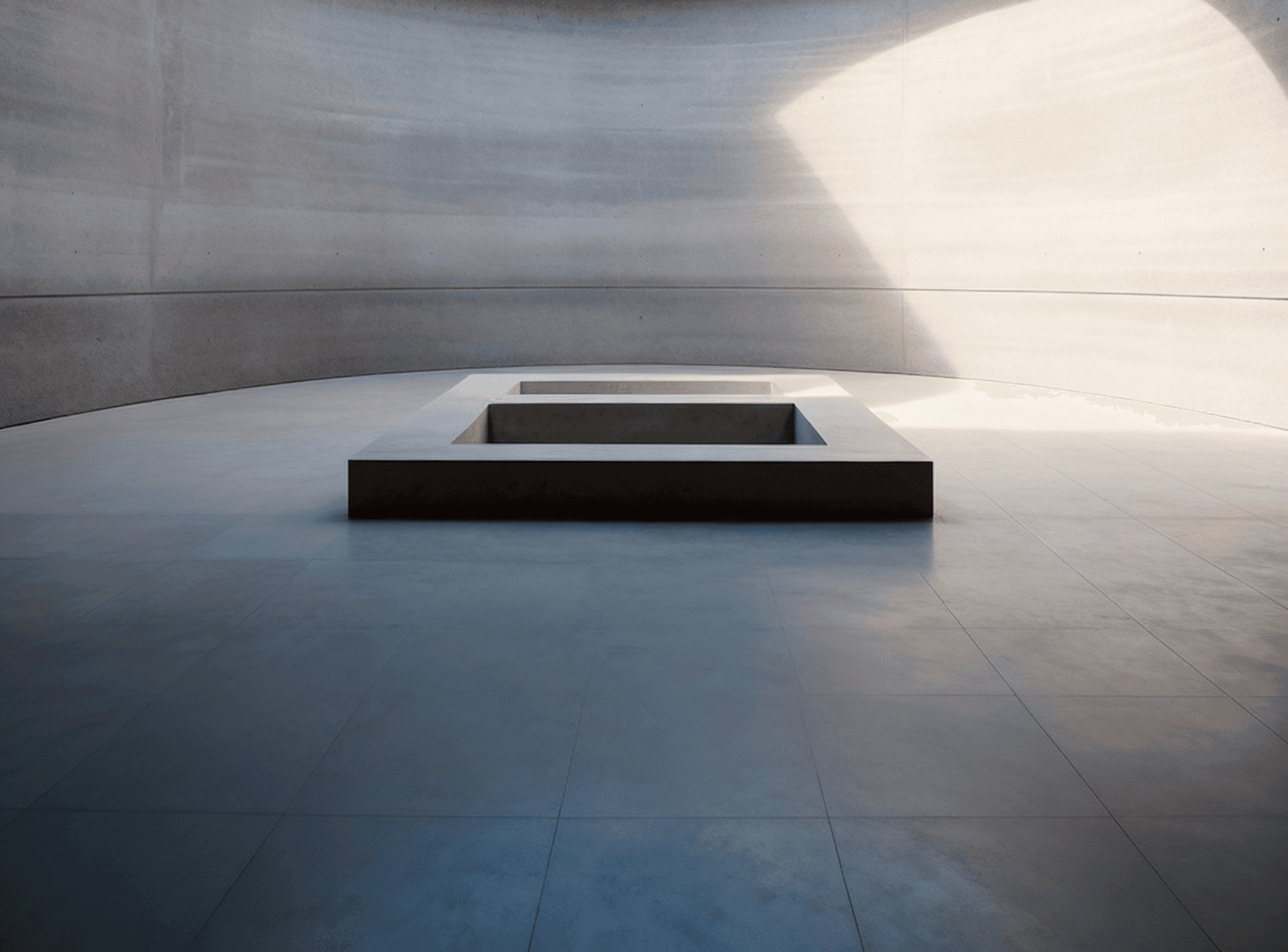
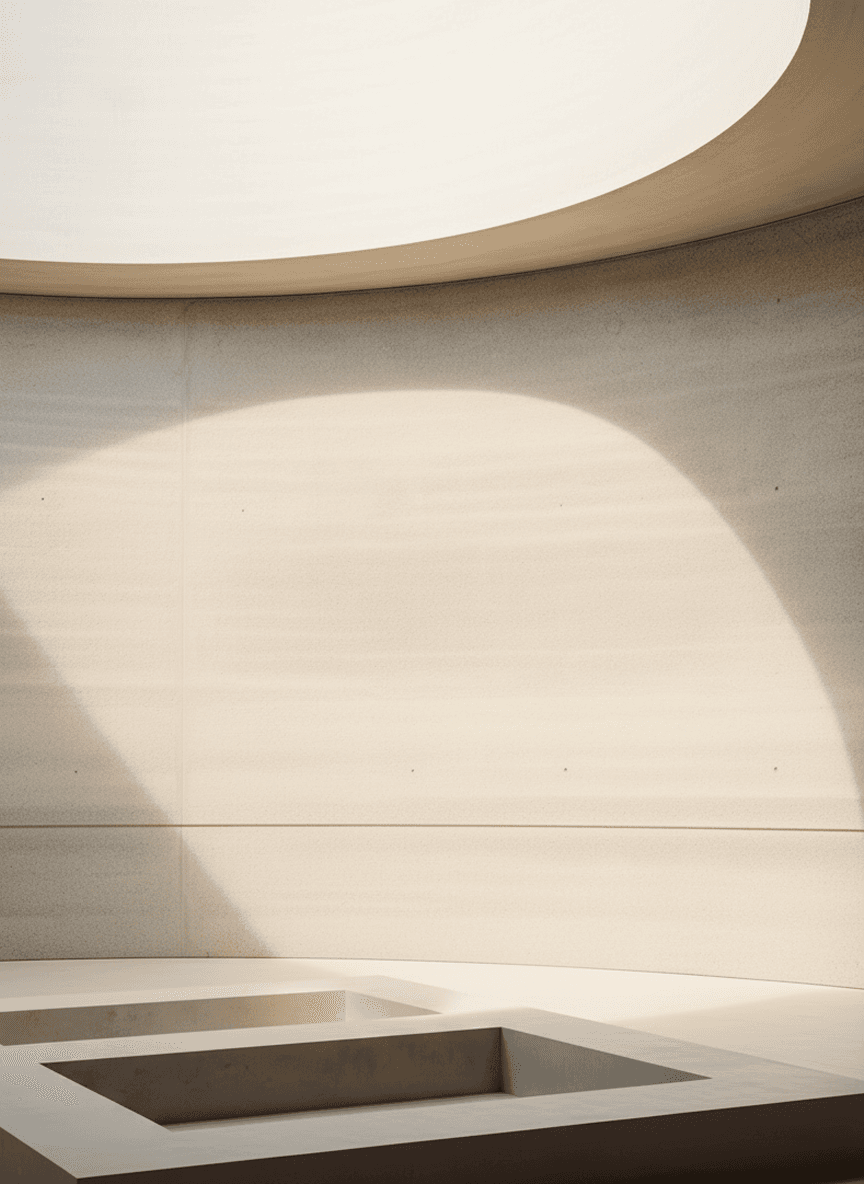
A concept project conceived as a controlled architectural environment defined by geometry, enclosure, and daylight. The space is organised around a circular roof opening that operates as the primary spatial device, drawing natural light into an otherwise enclosed volume and establishing a clear centre and orientation. This opening allows light to articulate the passage of time while revealing the curvature and materiality of the surrounding surfaces. The interior is defined by continuous, restrained materials and a limited palette, enabling form, proportion, and light to remain the dominant elements. The project prioritises clarity, stillness, and material honesty, treating light as a structural component rather than an applied effect. The result is a quiet, focused interior in which spatial experience is shaped by the relationship between void, light, and enclosure.
Void_Light HeroJPG
Void_Light 01.JPG
Void_Light Aerial.JPG
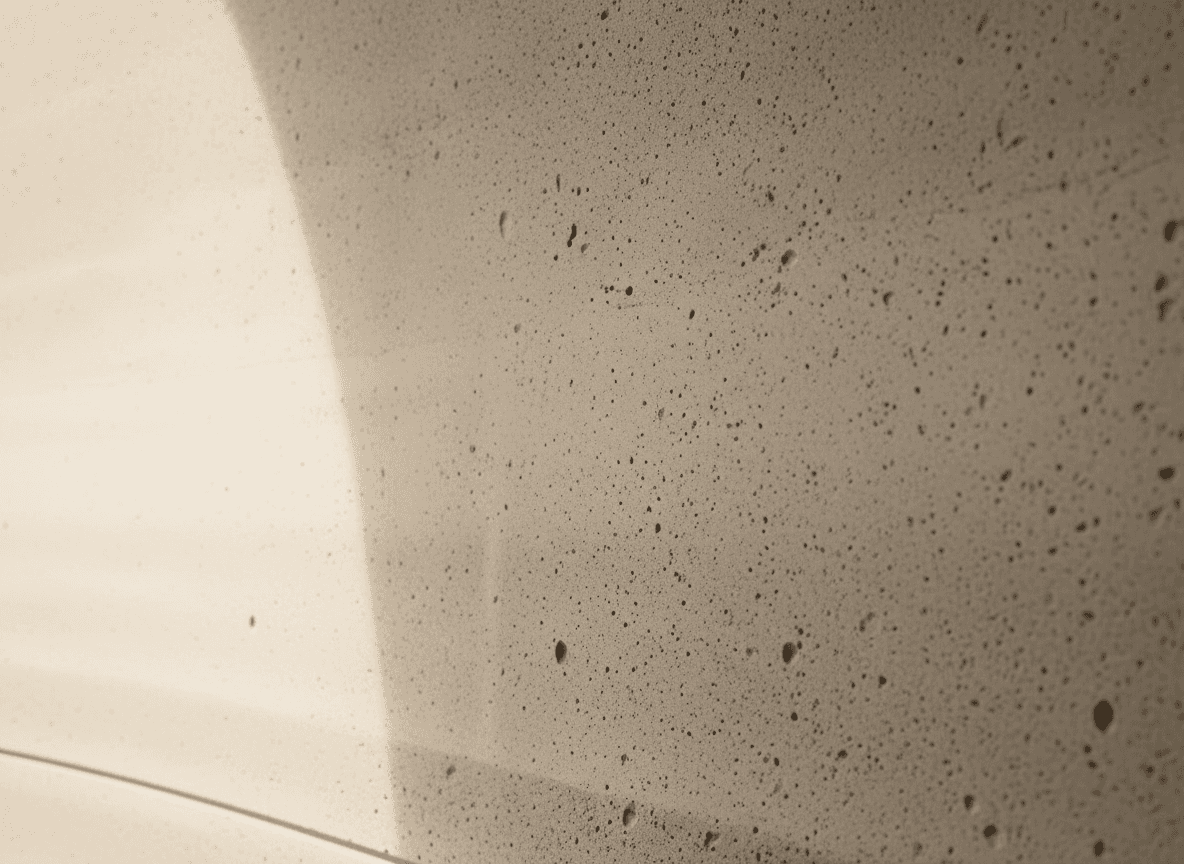
Void_Light Micro.JPG
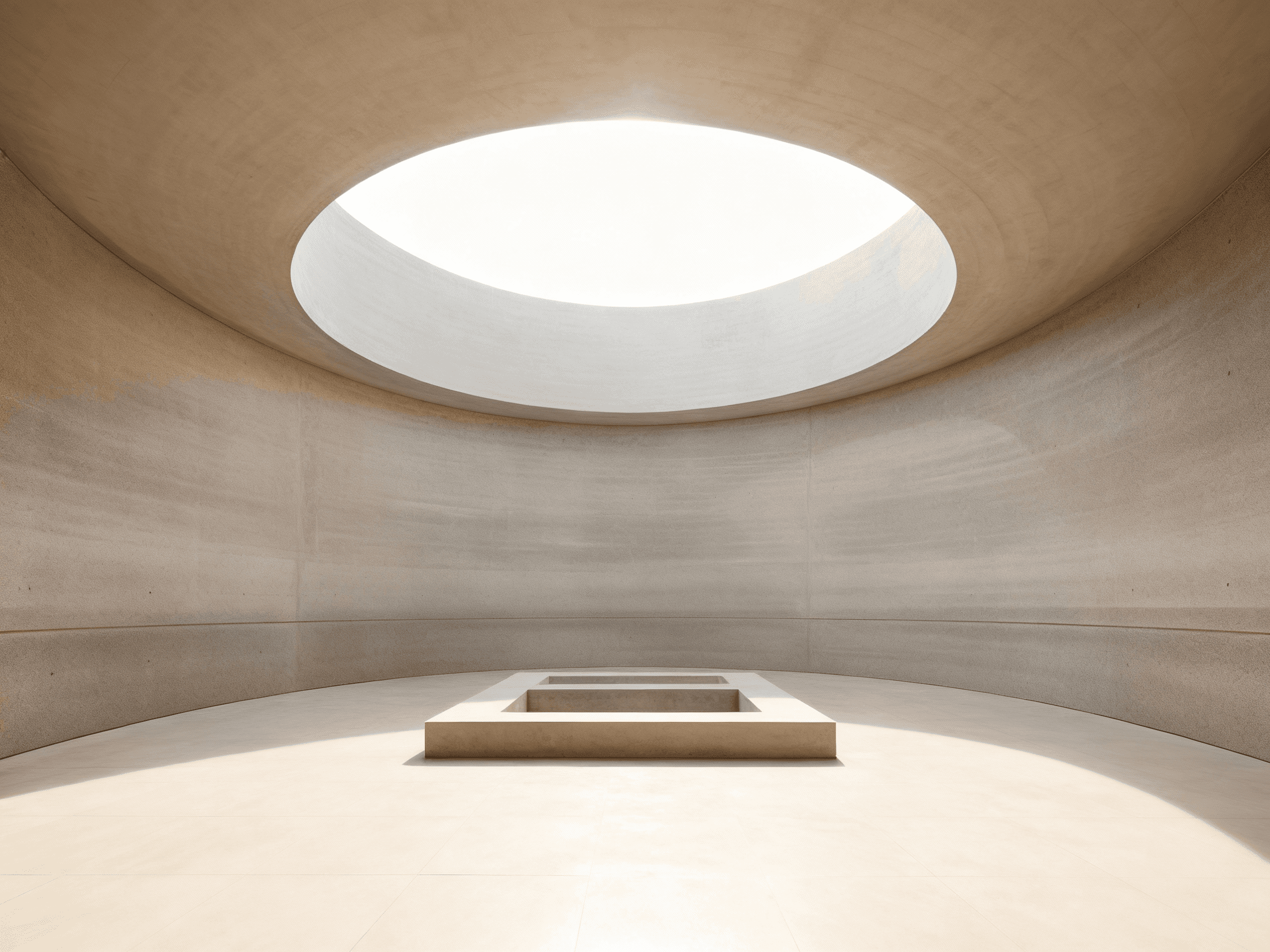
Void_Light 03.JPG
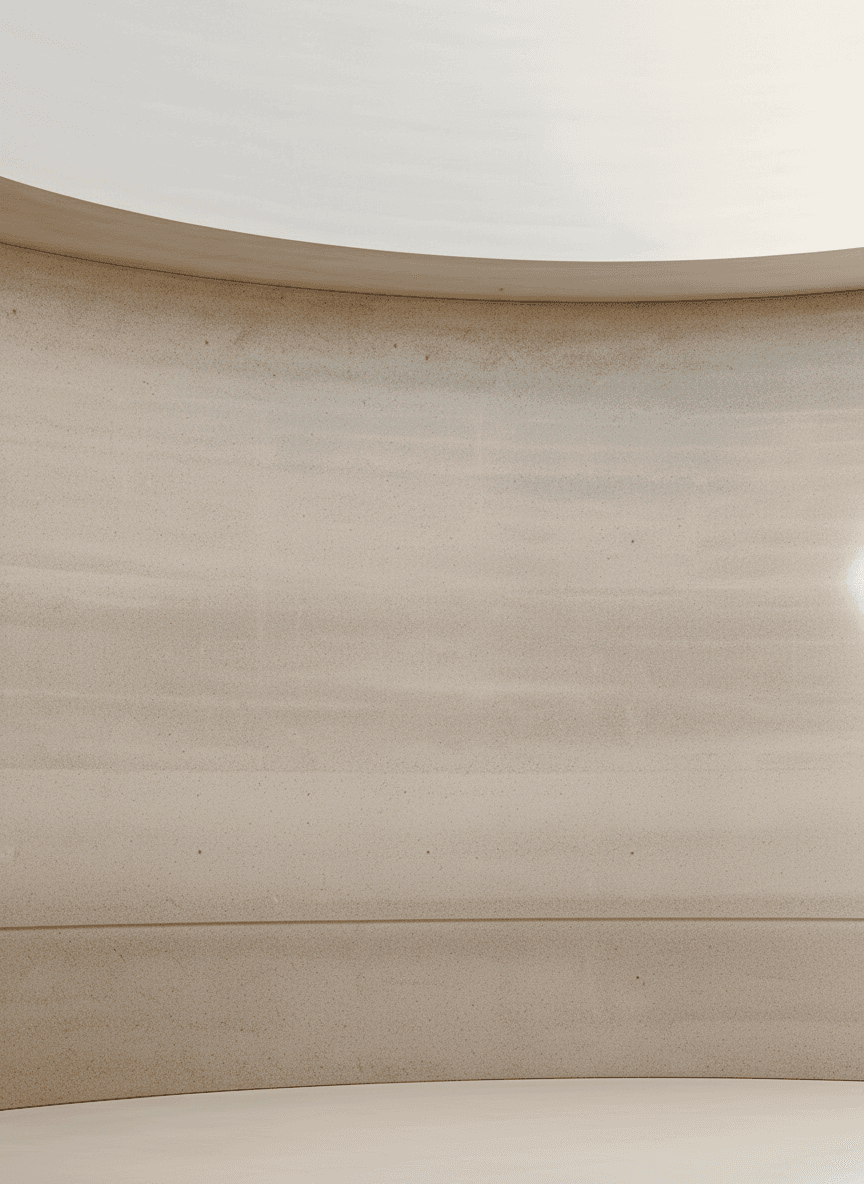
Void_Light 04.JPG
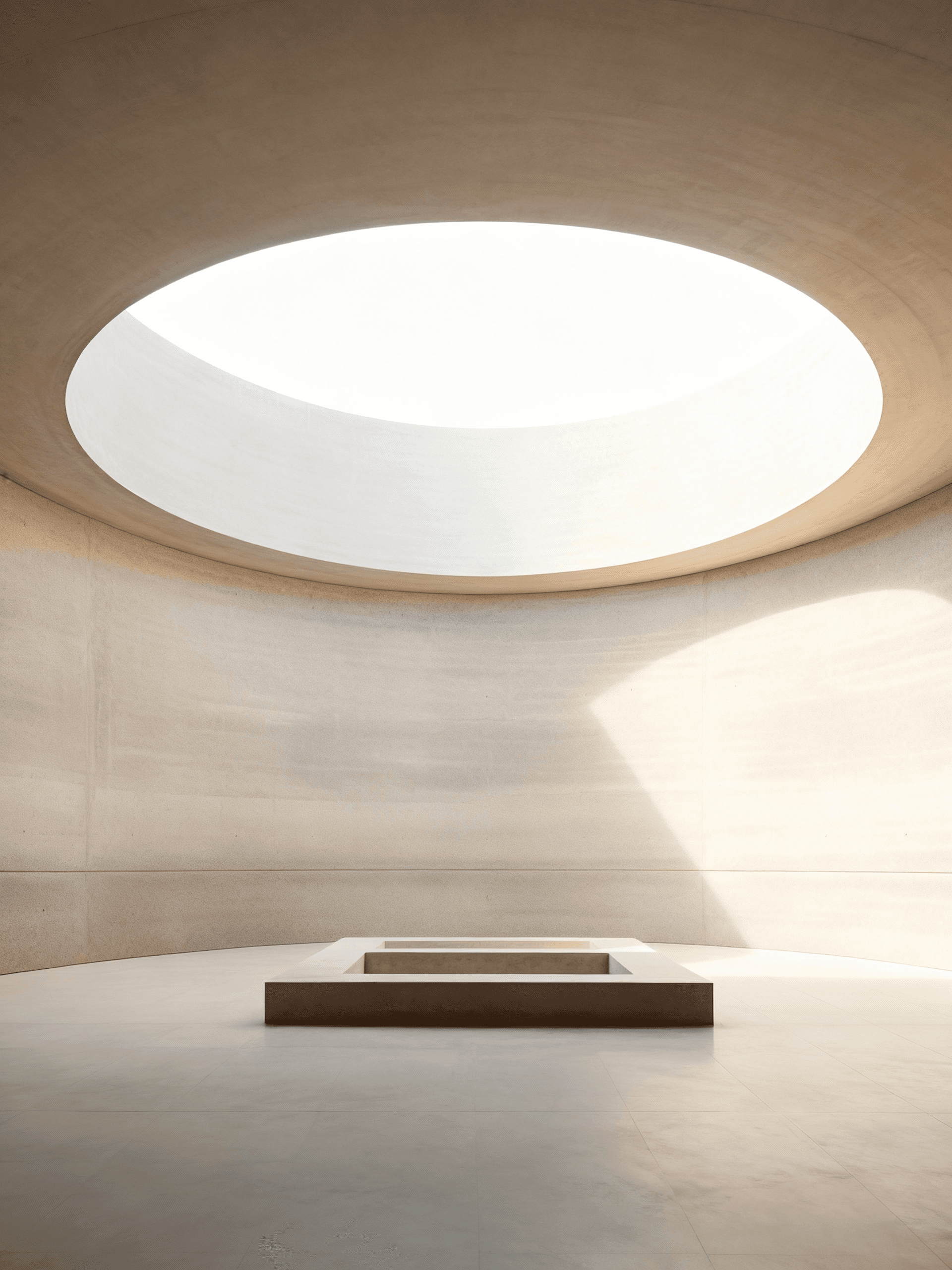
Void_Light 05.JPG
Void_Light Evening.JPG
Void_Light seating.JPG
Void_Light 02.JPG
Void and Light
,
Architecture
,
2024
A concept project conceived as a controlled architectural environment defined by geometry, enclosure, and daylight. The space is organised around a circular roof opening that operates as the primary spatial device, drawing natural light into an otherwise enclosed volume and establishing a clear centre and orientation. This opening allows light to articulate the passage of time while revealing the curvature and materiality of the surrounding surfaces. The interior is defined by continuous, restrained materials and a limited palette, enabling form, proportion, and light to remain the dominant elements. The project prioritises clarity, stillness, and material honesty, treating light as a structural component rather than an applied effect. The result is a quiet, focused interior in which spatial experience is shaped by the relationship between void, light, and enclosure.
Void_Light HeroJPG
Void_Light 01.JPG
Void_Light Aerial.JPG
Void_Light Micro.JPG
Void_Light 03.JPG
Void_Light 04.JPG
Void_Light 05.JPG
Void_Light Evening.JPG
Void_Light seating.JPG
Void_Light 02.JPG
Impossible Objects Paris Showroom
,
Interiors
,
2023
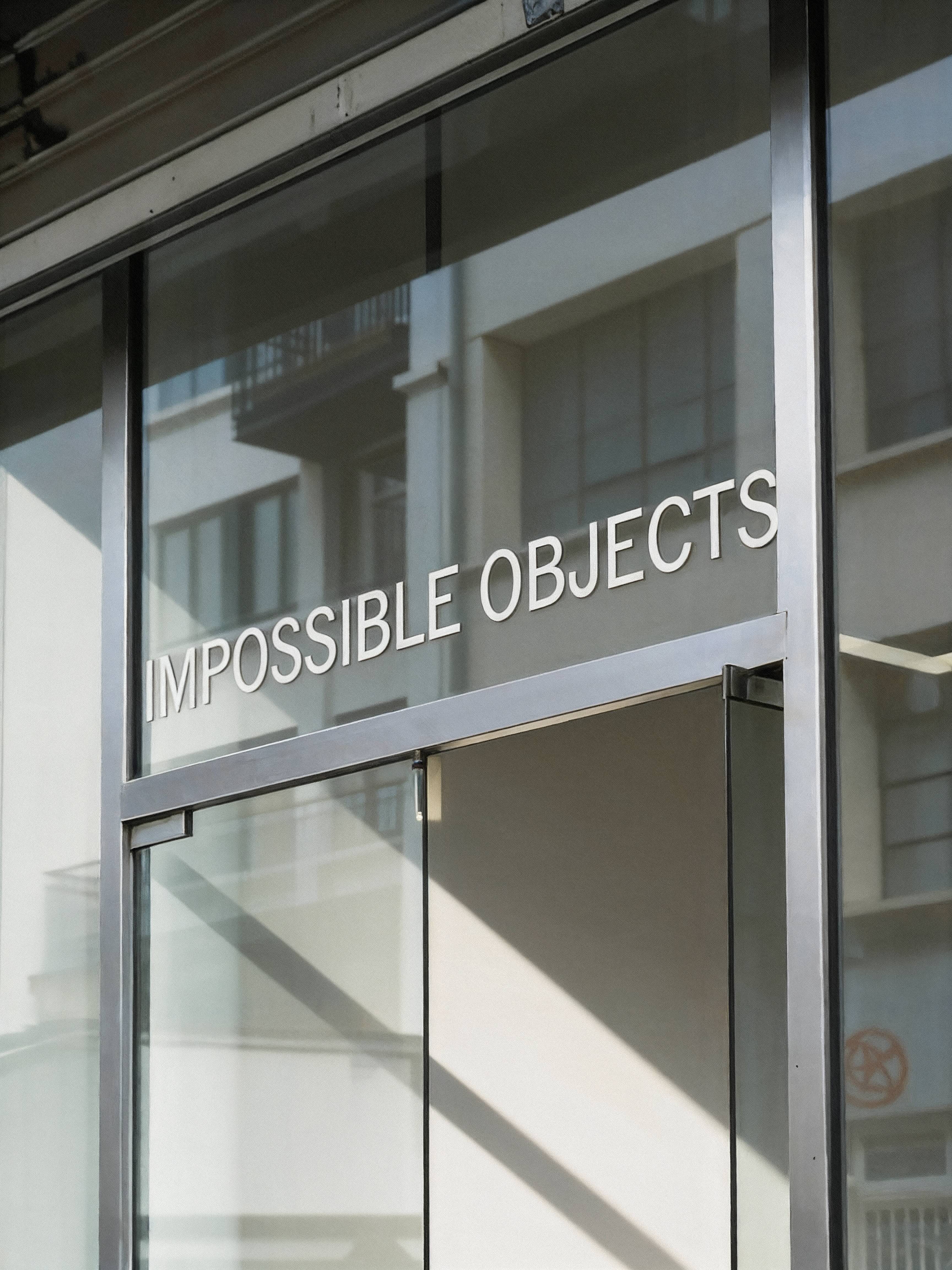
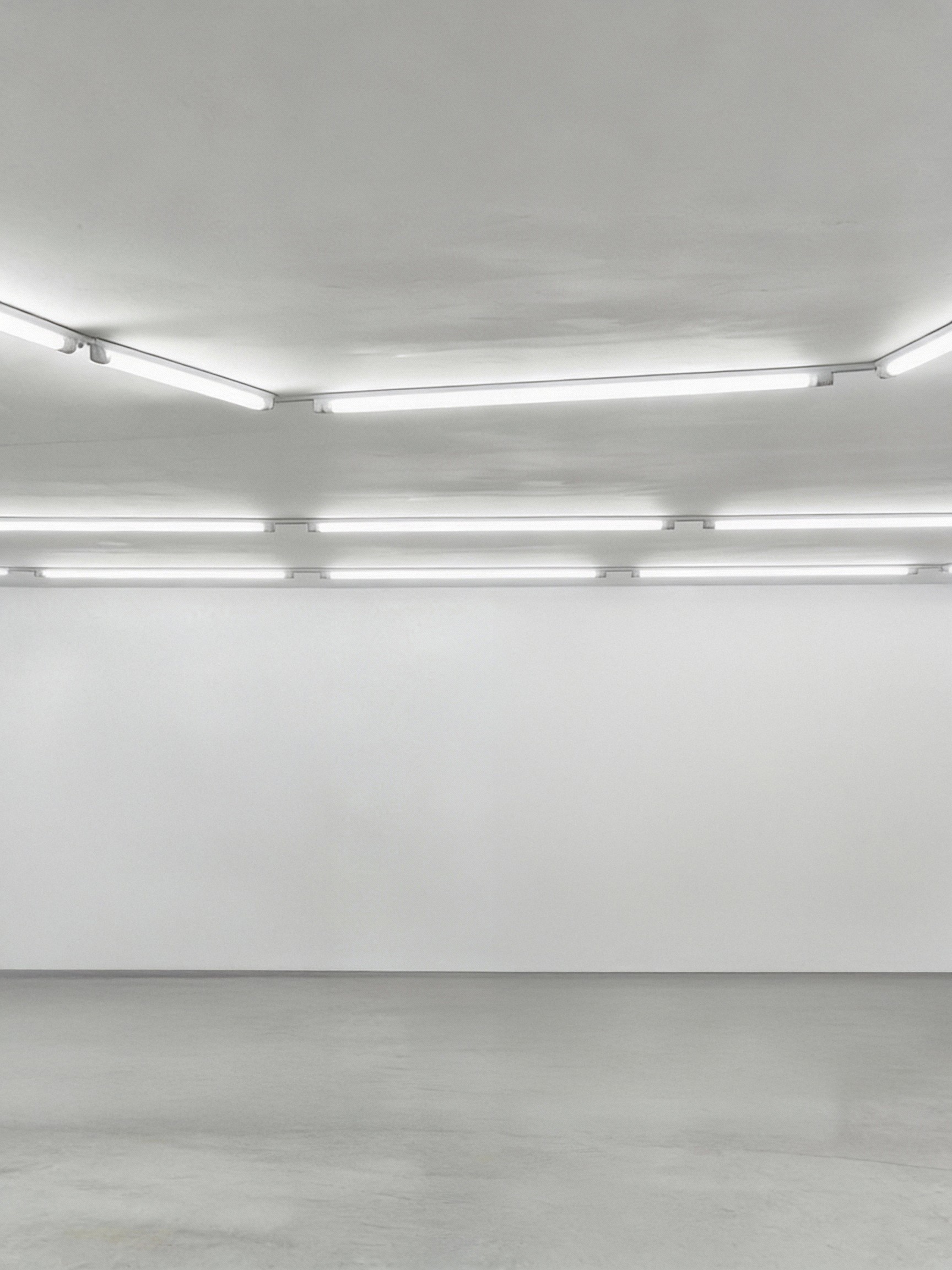
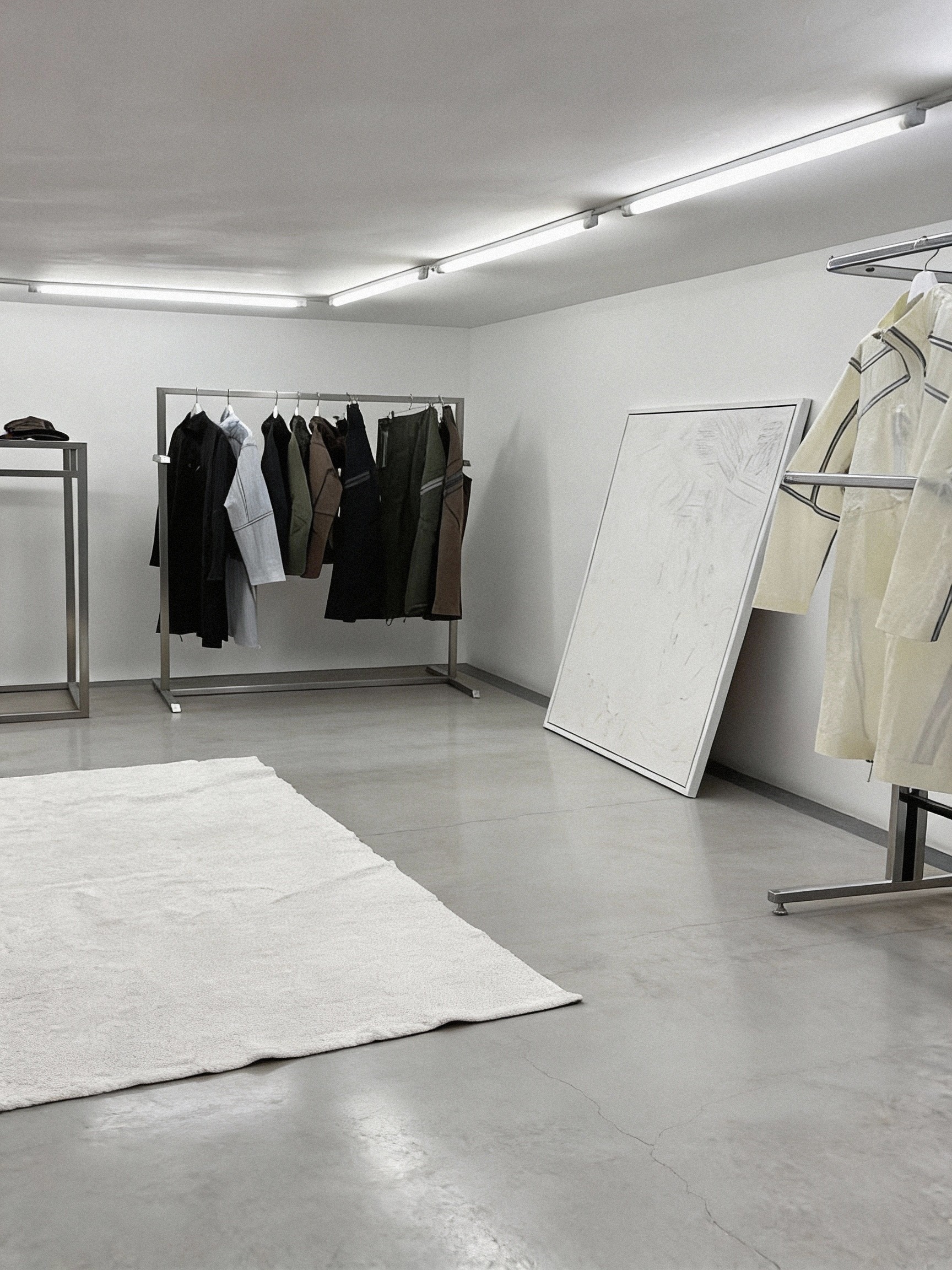
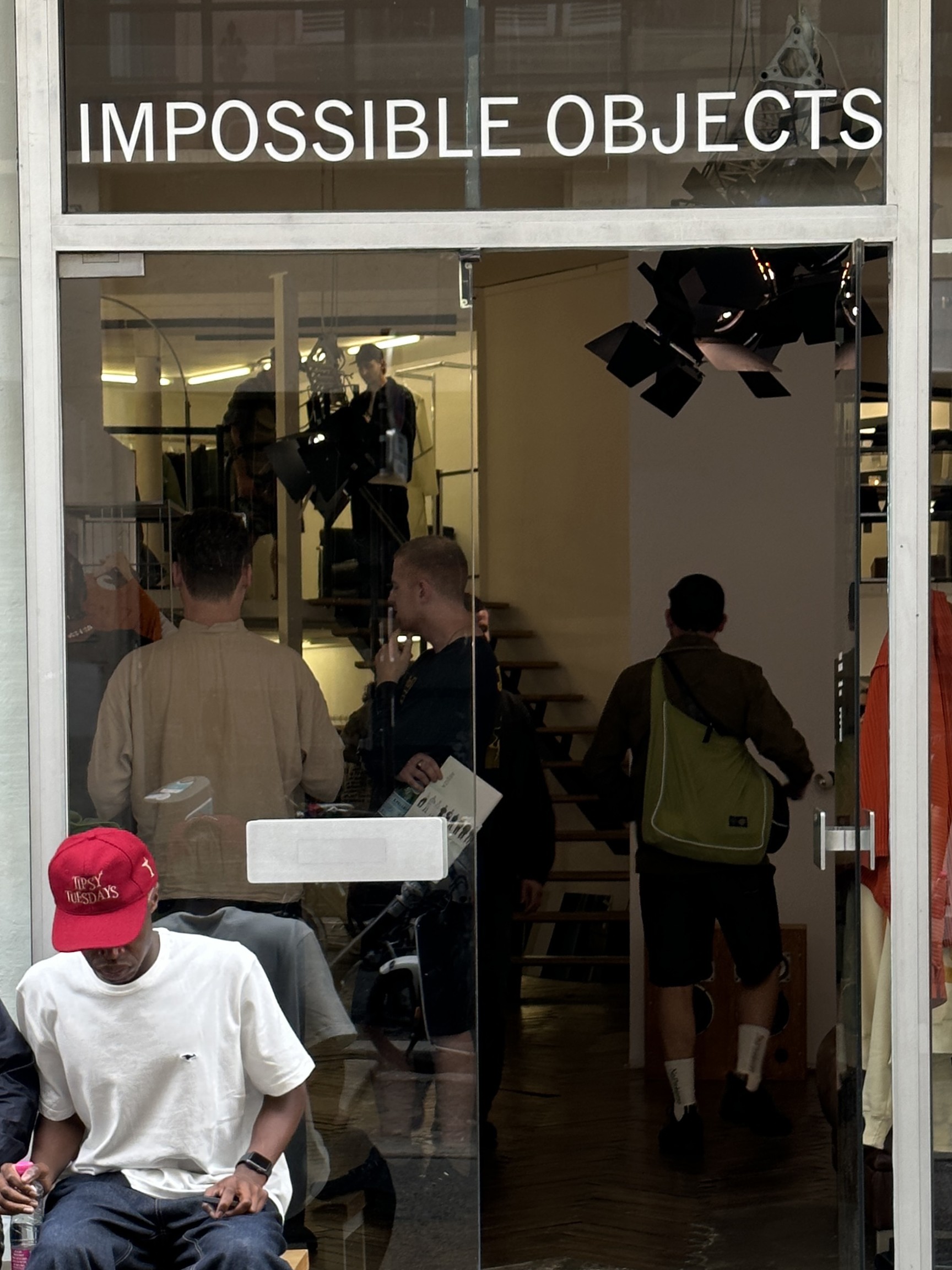
The Impossible Objects Paris showroom was conceived as a temporary interior environment for Paris Men’s Fashion Week 2023, designed to present a curated selection of international fashion and product brands within a unified architectural framework. The project was informed by early modernist principles and the radical spatial thinking of Archizoom Associati, particularly their use of repetition, continuity, and non-hierarchical space. These references shaped a restrained design language in which lighting, structure, and display operate as a continuous field rather than as isolated elements. A linear, continuous lighting system was developed as the primary organising device, extending throughout the showroom to establish rhythm, orientation, and spatial clarity, while supporting the flexible arrangement of furniture and display elements. The interior prioritised neutrality, proportion, and legibility, allowing individual brand identities to be read clearly within a calm, consistent environment. The result is a functional yet sculptural temporary architecture that balances precision, flexibility, and material restraint, aligning with Impossible Objects’ design-led approach to contemporary brand presentation.
IO Paris_01.JPG
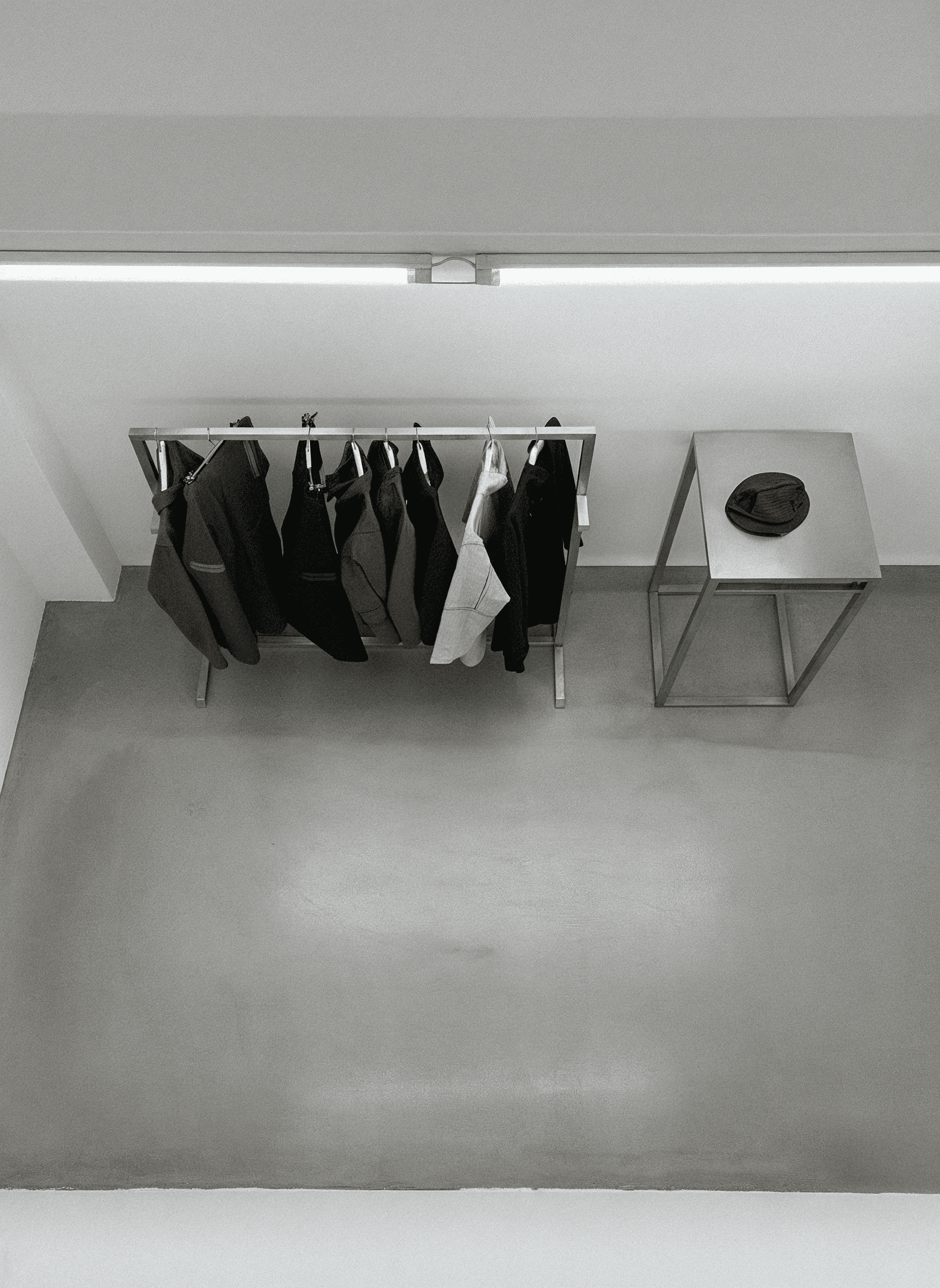
IO Paris_02.JPG
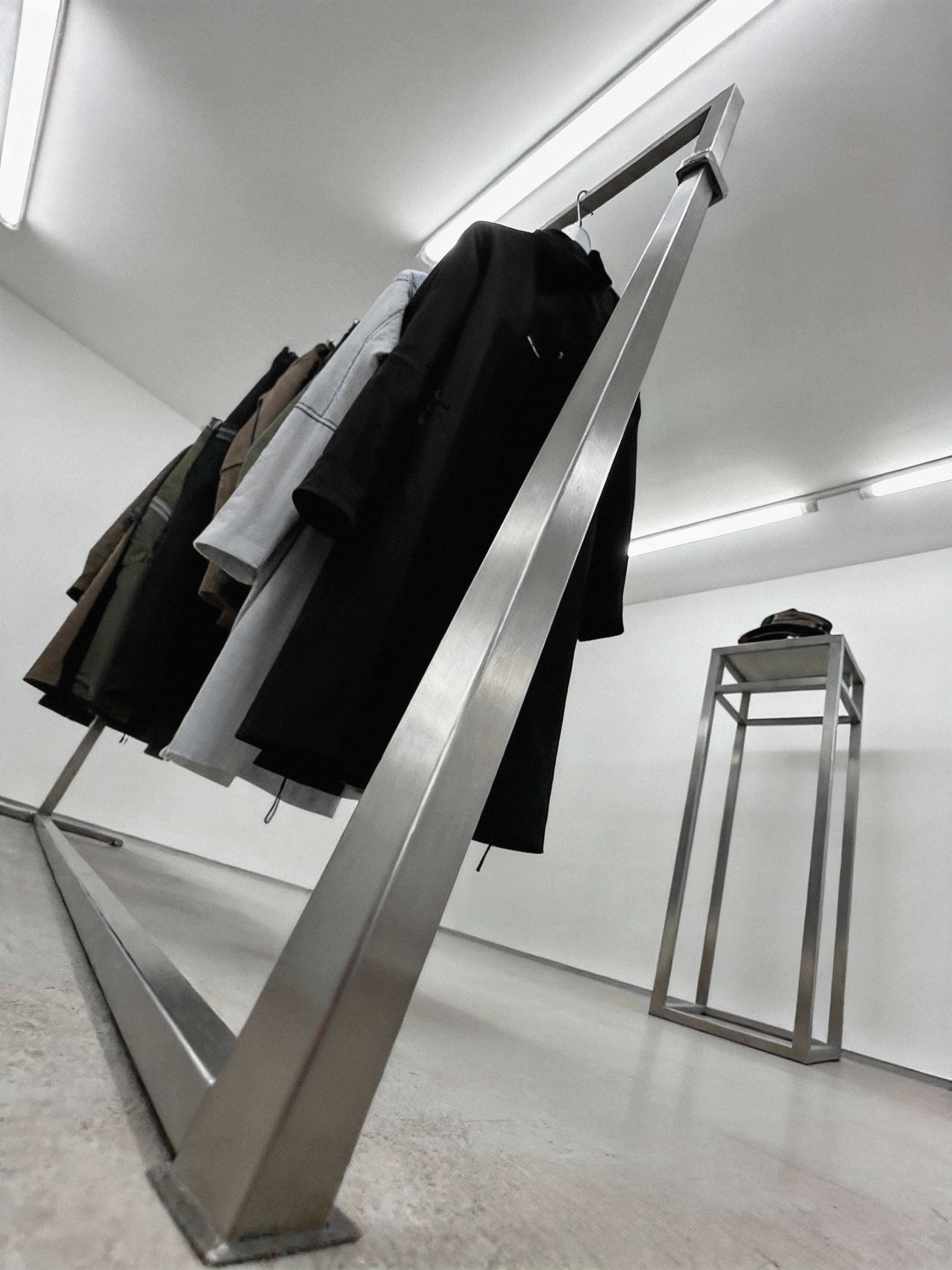
IO Paris_03.JPG
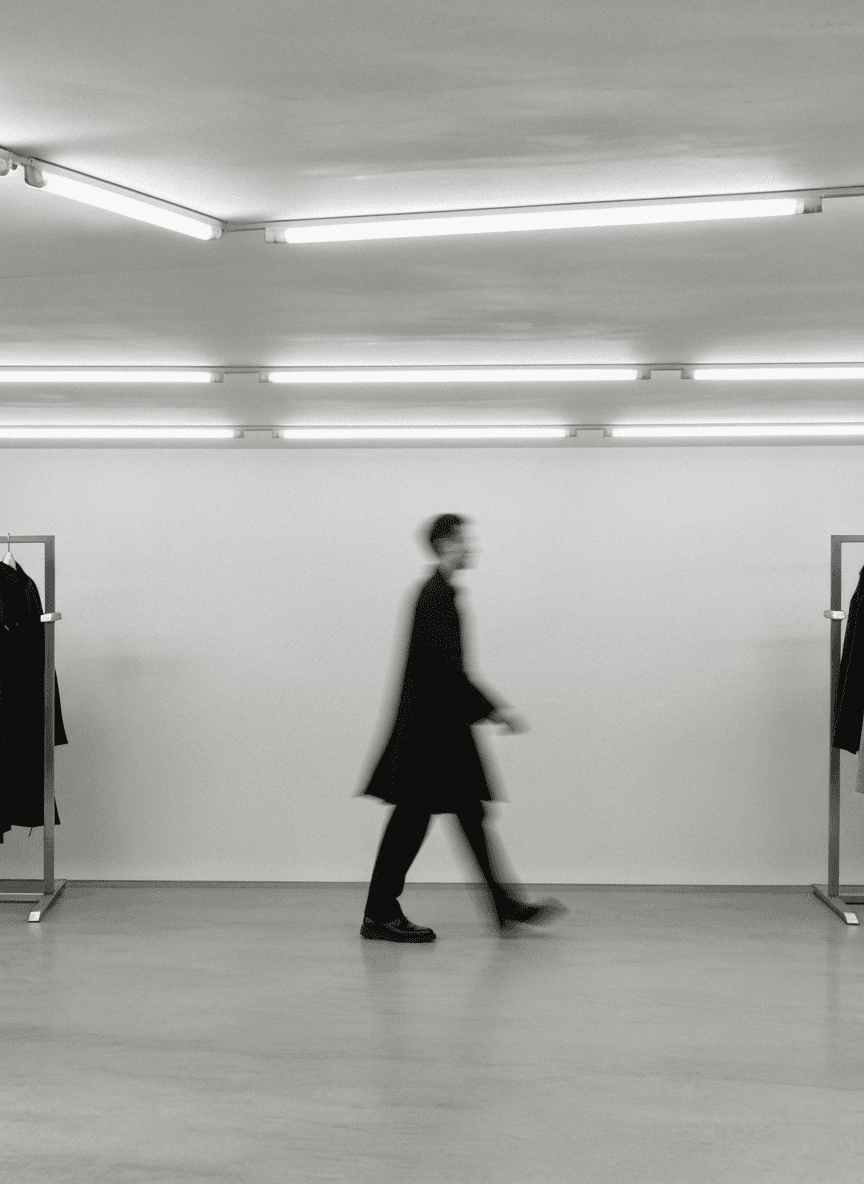
IO Paris_05.JPG
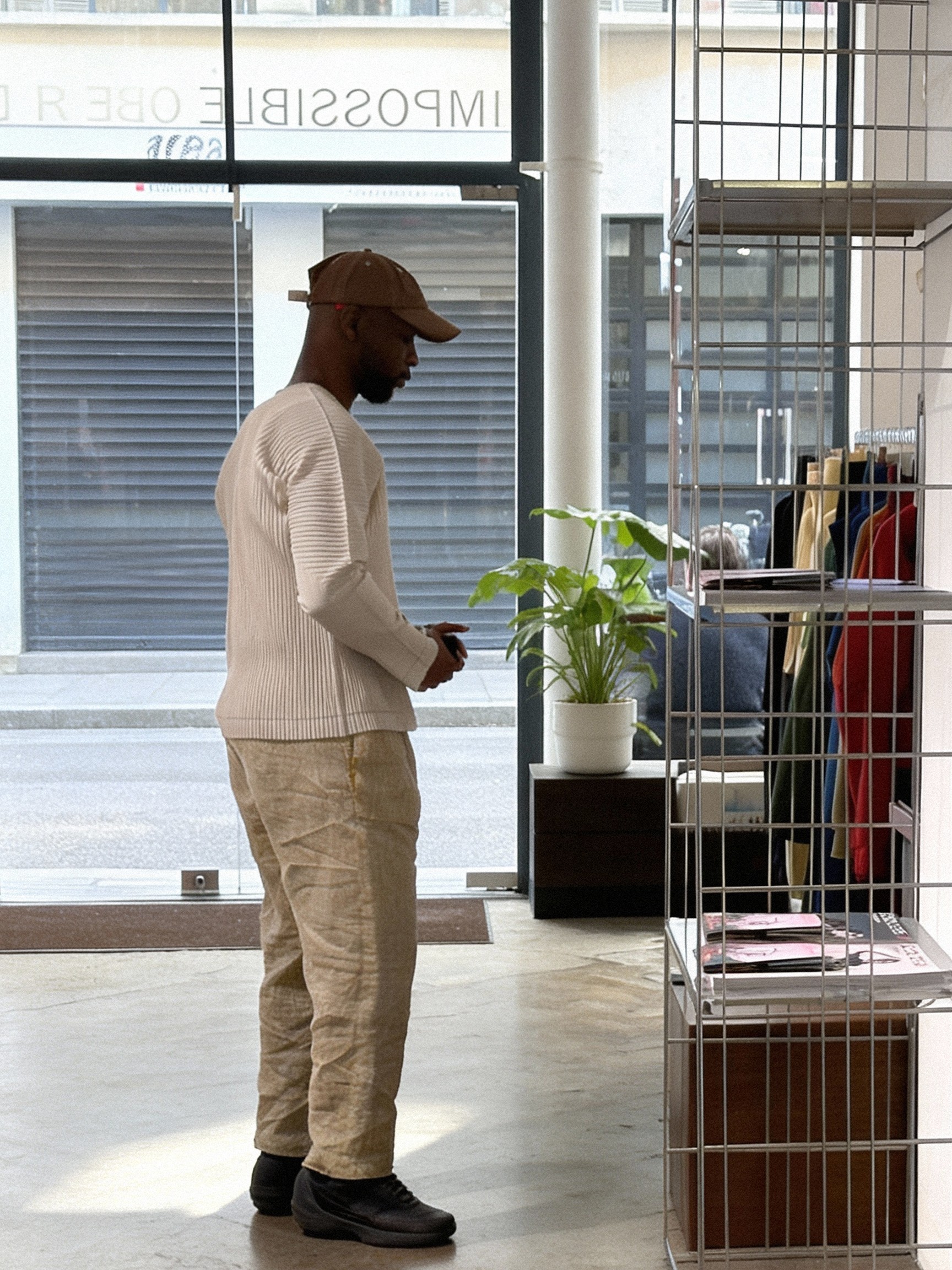
IO Paris_06.JPG
IO Paris_07.JPG
IO Paris_08.JPG
IO Paris_04.JPG
Impossible Objects Paris Showroom
,
Interiors
,
2023
The Impossible Objects Paris showroom was conceived as a temporary interior environment for Paris Men’s Fashion Week 2023, designed to present a curated selection of international fashion and product brands within a unified architectural framework. The project was informed by early modernist principles and the radical spatial thinking of Archizoom Associati, particularly their use of repetition, continuity, and non-hierarchical space. These references shaped a restrained design language in which lighting, structure, and display operate as a continuous field rather than as isolated elements. A linear, continuous lighting system was developed as the primary organising device, extending throughout the showroom to establish rhythm, orientation, and spatial clarity, while supporting the flexible arrangement of furniture and display elements. The interior prioritised neutrality, proportion, and legibility, allowing individual brand identities to be read clearly within a calm, consistent environment. The result is a functional yet sculptural temporary architecture that balances precision, flexibility, and material restraint, aligning with Impossible Objects’ design-led approach to contemporary brand presentation.
IO Paris_01.JPG
IO Paris_02.JPG
IO Paris_03.JPG
IO Paris_05.JPG
IO Paris_06.JPG
IO Paris_07.JPG
IO Paris_08.JPG
IO Paris_04.JPG